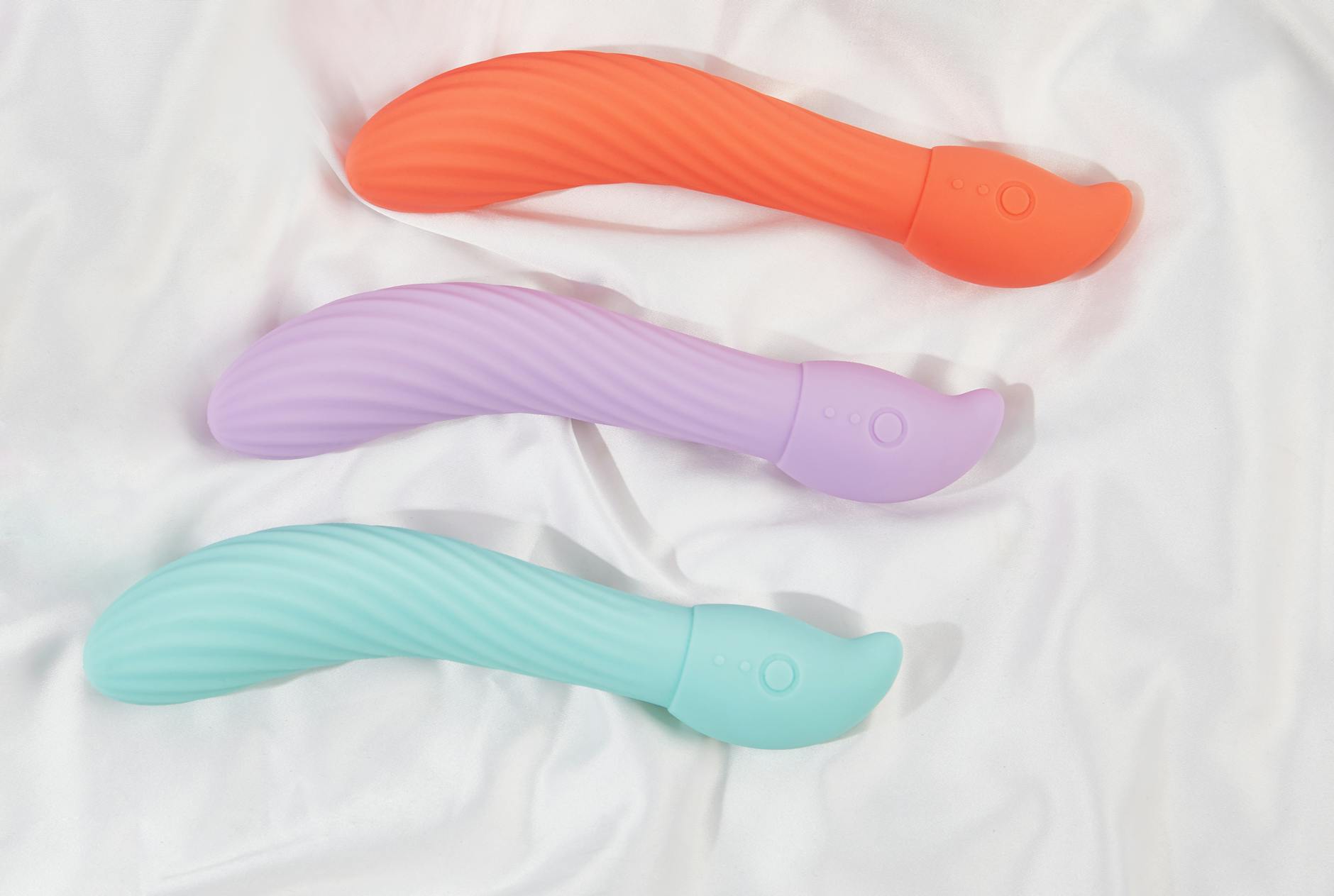
Let's start here
Your partner doesn't want you to have a lemon vibrator. You do. And now there's this thing between you that's become bigger than the toy itself. It's become a conversation about trust, adequacy, attraction, and whether you still want what the other person is offering. Which is unfair to a piece of silicone.
Honestly though, this is one of the most common conversations I see couples get stuck on. And almost always, the real problem isn't the lemon clitoral vibrator. It's what your partner believes the vibrator means.
What your partner is actually afraid of
When someone resists the idea of you using lemon vibrators, they're usually not objecting to stimulation technology. They're unconsciously processing one of three narratives:
"If you need this, I'm not enough." This one runs deep. Your partner may believe that good sex means they should be able to bring you to orgasm with their body alone. A toy existing in your bedroom becomes proof of their failure. It's not true, but they believe it.
"This changes what we have." Some partners worry that introducing a vibrator shifts the entire relationship dynamic. They imagine it becoming a wedge, or their role shrinking. They might also fear you'll prefer it to them, or that you're edging toward wanting something else entirely.
"I'm losing you." This is the hardest one to hear, but it's where a lot of hesitation actually lives. Sometimes a partner's resistance isn't about the toy at all. It's about sensing a shift in you, a withdrawal, a re-prioritization of your own pleasure over the relationship. The lemon vibrator becomes the symbol of that shift.
None of these beliefs are rational. All of them are deeply human.
The conversation you actually need to have
Most couples try to sell the toy. "It's not about replacing you. It's not about cheating. It's just a tool." And your partner nods and feels worse, because now they're also irrational.
Instead, separate the toy conversation from the relationship conversation.
Start here: "I've noticed you seem worried about the idea of me using a vibrator. I don't want to push you into something that makes you uncomfortable. But I also want to understand what you're actually worried about. Not the vibrator. What does this bring up for you?"
Then listen. Don't defend. Don't explain why they're wrong. Let them name the fear.
If they say "I'm worried you won't need me," that's different from "That's just weird." The first one is real and deserves a real answer. The second is a deflection, and you can gently push back.
Once you know what they're actually afraid of, you can talk to that fear. Not to the object.
Three things that actually work
1. Connect lemon vibrators to pleasure, not dissatisfaction.
Your partner may believe that wanting a vibrator means you're unsatisfied with them. Reframe it. "My pleasure matters to me, and I want to explore what feels good. This isn't about anything being wrong with what we have. It's about me knowing my own body better." And then, critically, you need to mean it. If you're using a lemon vibrator as a workaround for intimacy problems, your partner will sense it. If you're using it as an expansion of what you already enjoy together, that's different.
2. Invite them in, only if it feels right.
Some partners feel less threatened if they're part of the experience. Others feel more intruded upon. Know your person. If your partner might feel less anxious seeing the toy, holding it, understanding how it works, you can offer that. "Want to see what this does? I can show you how it feels against my hand, so you get it." No pressure. But some partners who were skeptical become less anxious once the thing is demystified.
3. Create a boundary that protects both of you.
Here's what I tell couples: "This is mine. Not ours. Not a couple thing. My pleasure, my choice, my body." And then you follow through. You don't need permission. You don't need them to understand. But you also don't do it in a way that feels hostile or exclusionary. You might use a lemon vibrator alone sometimes. You might use one during sex together sometimes. Your partner doesn't get to veto it. But they also don't get to feel like they're being replaced. That's on you to communicate.

Photo by cottonbro studio on Pexels
When the resistance is about something else entirely
Sometimes your partner's hesitation isn't really about lemon vibrators at all. It's about resentment that's been building. Or a mismatch in how often you both want sex. Or feeling disconnected and worried the toy is a sign you're checking out.
If that's the case, the vibrator conversation won't resolve anything. The vibrator is just the thing you both are pointing at instead of the actual problem. You need to go deeper. Maybe that means a conversation about what's changed, or a therapist who can help you both understand what's underneath.
But here's the thing: sometimes introducing lemon sexual toys into a struggling relationship actually helps. Not because the toy fixes anything, but because it forces you to have the conversation you've been avoiding. Suddenly you're talking about desire, about pleasure, about what you each need. That's not nothing.
The permission you're actually asking for
When you want your partner to be okay with you using a clitoral vibrator, you're not actually asking for permission about the toy. You're asking for permission to prioritize your own pleasure. You're asking them to understand that your body belongs to you, and that wanting to explore it doesn't diminish what you have together. You're asking them to trust that your desire for yourself isn't the same as desire for someone else.
Those are bigger asks than they sound. And they require your partner to examine some deep beliefs about love, intimacy, adequacy, and control. Some partners get there easily. Others need time.
Your job is to stay grounded in your own truth while being patient with theirs. Not as a sacrifice. As a choice. Because you actually want this person to feel secure, not just to get your way.
The best thing you can do is stop trying to convince them the toy is fine and start asking what they actually need to feel safe.
What changes when you do this right
I've watched couples move from this exact tension to a place where the partner not only accepts lemon vibrators but eventually brings them into intimate moments together. Not because they were guilted into it, but because they understood it wasn't a threat.
I've also watched couples decide together that vibrators aren't for them, and that becomes a real choice instead of a compromise. Both can work. The difference is whether you got there through actual conversation or through one person giving up.
The lemon vibrator is innocent. But the conversation around it isn't. It's where you both figure out whether you can hold each other's autonomy and each other's insecurity at the same time. That's the skill you're actually building.
FAQ
Why does my partner feel threatened by lemon vibrators when I've told them it's not about them?
Because rational reassurance doesn't address emotional beliefs. Your partner may intellectually understand that a toy isn't a replacement, but emotionally still feel like it means something about their adequacy. That belief needs to be processed, not explained away. They need to feel heard first.
Is it okay to use lemon clitoral vibrators without your partner's permission?
Yes. Your body is yours. But there's a difference between not needing permission and doing it in a way that feels secretive or hostile. If you're hiding it, your partner will sense that. If you're open about it and they're still uncomfortable, they need to work through that. You don't need to shrink to make them comfortable with your own pleasure.
How long should I wait for my partner to come around to lemon sexual toys?
There's no timeline. But there's a difference between "they're processing this" and "they're using this as control." If months have passed and your partner is still using the toy as a weapon in arguments, or refusing to even discuss it, that's a relationship problem bigger than vibrators. Consider whether you need a counselor or a deeper conversation about how you make decisions together.
Can using a lemon vibrator actually fix a sexless marriage?
Not directly. But it can be a gateway to fixing it. Sometimes the only way couples start talking about desire is through the friction of introducing something new. If your marriage is sexless, the vibrator isn't the solution. The solution is figuring out why desire dried up and whether both of you want to rebuild it. A vibrator might help once you're on that journey.
What if my partner says they'll feel emasculated by lemon vibrators?
Take that seriously, but don't take responsibility for it. Emasculation is an internal experience, not something your body creates. You can be compassionate about his feelings while staying clear that your pleasure isn't contingent on his comfort. Sometimes what helps is his own work with a therapist on what masculinity actually means to him.
How do I know if resistance to lemon vibrators is about the toy or about the relationship?
Ask. "I want to understand what's really going on here. Is this about the vibrator, or does this touch something bigger?" Listen to the answer. If they can't articulate anything beyond "I don't like it," there might be something they haven't examined yet. You can offer to explore that together, but you can't force the insight.
Moving forward
Here's what I know: the couples who navigate this best are the ones who can hold two things at once. They can say "I'm going to use a vibrator because my pleasure matters" and also "I hear that you're scared, and I care about that fear." Not instead of. At the same time.
That's harder than it sounds. It requires you to stay connected to your partner's humanity while staying connected to your own autonomy. But that's the actual work of a partnership. The lemon vibrator is just the place where you get to practice it.
If you're stuck in this conversation and it keeps looping, talking with a therapist who specializes in relationship dynamics can help you both understand what's underneath. That's not weakness. That's investment in something that matters. You deserve a relationship where your pleasure and your partner's security aren't in competition. And you deserve to know what you actually want, with or without a lemon sucker vibrator.
Ready to move beyond this impasse? Let's talk about building the intimacy you both deserve.