How long is too long?
Honestly? There's no such thing. I've worked with clients who stepped away from their own pleasure for six months after a breakup, two years into a struggling marriage, or five years because depression made touch feel impossible. The length doesn't matter. What matters is that you're thinking about coming back.
Here's the thing nobody tells you: the return is not about rekindling what you had. It's about meeting yourself where you are now. Your body has changed. Your mind has changed. Your relationship to desire has shifted. And that's not a problem to solve. It's a starting point.
Why the dry spell happened (and why it doesn't matter)
I ask every client this question, and the answers vary wildly. Grief. Resentment. Medication changes. Life stress. Shame about your body. A partner who stopped trying. Sometimes multiple reasons at once, tangled together so tightly you can't separate them.
But here's what I've learned: spending weeks trying to untangle why before you start exploring what's possible now is procrastination dressed up as therapy. The why can wait. Your body needs permission to feel again first.
Why lemon vibrators work so well for this specific moment
Three reasons, and they're concrete.
First, they don't require a warm-up fantasy. When you've been away from pleasure for a long time, your mind often won't cooperate. You sit there, trying to generate arousal through thought alone, and it feels forced. Lemon vibrators by Shop Lemon Sexual Toys skip that step. The physical sensation comes first. Your mind catches up. This is the opposite of how most people assume pleasure works, and it's often exactly what you need.
Second, they're forgiving. If your clitoris is sensitive from disuse or your nerve endings feel janky from medication or stress, lemon clitoral vibrators offer graduated intensity. Start on pattern 1. Your body tells you if that's too much. There's no wrong answer. No failure states. Just feedback.
Third, they reframe pleasure as solo. When you've been in a relationship that killed desire, or grieving after a breakup, or just in your own head for too long, partnered pressure is the enemy. Solo exploration with a lemon vibrator is permission to be selfish about your own sensation. This matters more than you might think.
The actual first session (and why it looks nothing like you think)
First session looks like this: you're not trying to orgasm. You're not even trying to get aroused. You're doing one thing. You're noticing.
Set a timer for fifteen minutes. No more, no less. Sit or lie somewhere you feel safe. Turn the lem vibrator on the lowest setting. Press it to the outer edge of your clitoris, not the center. Just notice what you feel. Temperature. Texture. Whether it's pleasant, uncomfortable, or neutral. That's the whole goal.
Most people feel almost nothing their first time back. That's normal. Your nervous system is still in guard mode. It's not sure it's safe to feel yet. After months or years without touch, your body is being cautious. That's not broken. That's actually protective.
If fifteen minutes feels fine, great. If three minutes feels like too much, that's also fine. The point is you're reestablishing the neural pathway that says my body is allowed to feel sensation. That's revolutionary, and it has nothing to do with orgasm.
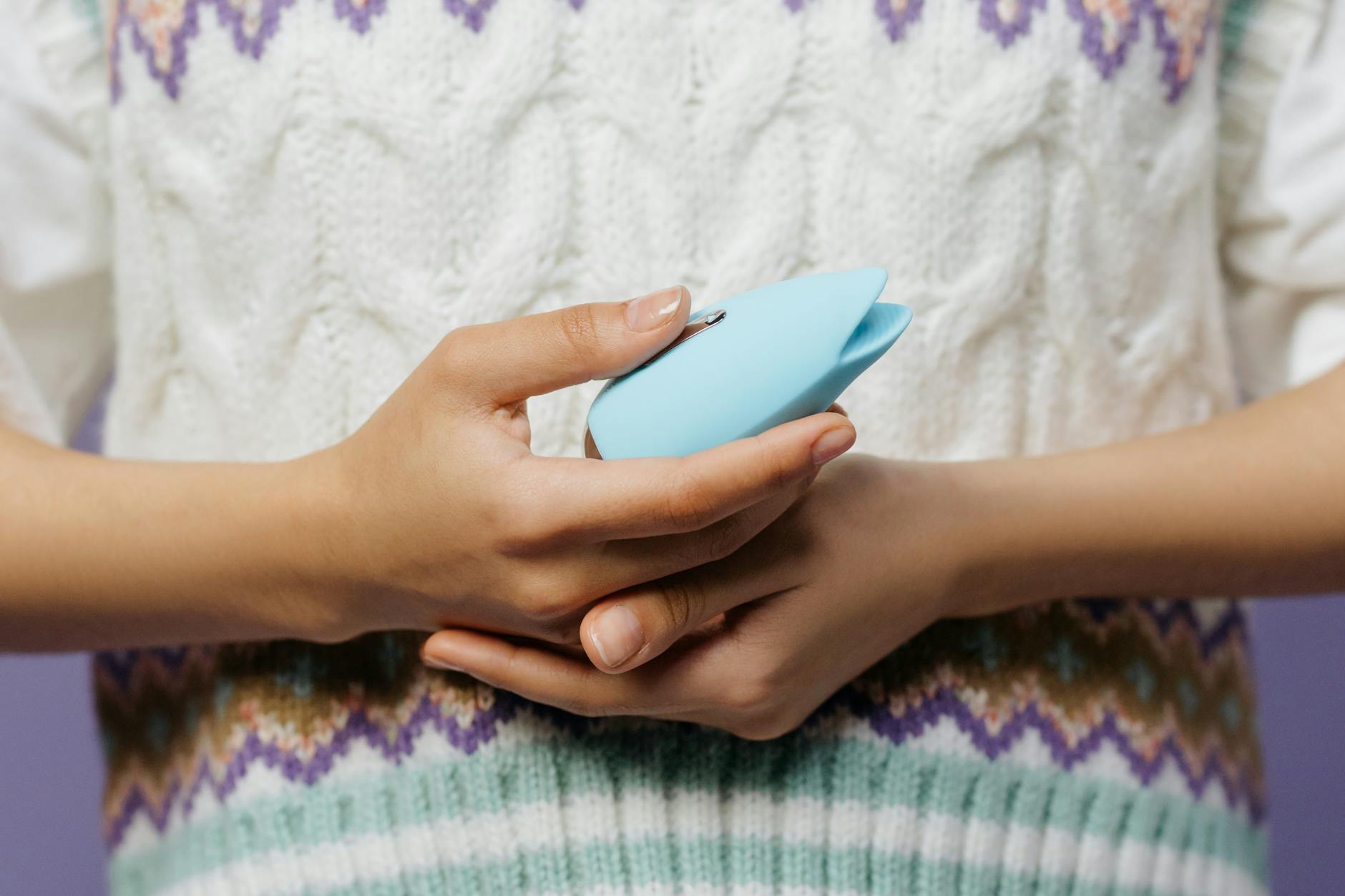
Photo by cottonbro studio on Pexels
Week two: texture and location
By week two, you've got a baseline. Now you're experimenting.
Try holding the lem vibrator at different angles. Try different spots around your clitoris, not just the center. You'll find spots that feel numb and spots that feel electric. Spots that feel too intense and spots that feel like nothing. Map your own geography without judgment.
This is genuinely useful information. It tells you where your sensation is, where it's hiding, and what intensity your body is ready for right now. Write it down if that helps. Some people find that charting brings structure back to self-pleasure, which feels grounding when everything else feels chaotic.
The orgasm is not the goal. The goal is recalibration. You're saying to your nervous system: we're safe here, and sensation is okay. That message has to land before anything else happens.
Why shame shows up (and what to do when it does)
Around week three or four, when your body starts to respond and pleasure becomes a real possibility again, shame often crashes the party. It looks like: I wasted so much time. Or: I should be further along by now. Or: Other people don't need all this setup, what's wrong with me?
That voice is real, and it's not a sign you're broken. It's a sign you internalized the cultural narrative that pleasure should be automatic, that you should already be satisfied, that wanting to restart means failure.
Here's what I tell my clients: shame is not information. It's a reflex. You can notice it, and then keep going.
If shame keeps showing up during your sessions, that's useful data. It might mean you need to do some emotional work alongside the physical exploration. How to Use Lemon Vibrators When You Feel Self-Conscious About Pleasure has concrete strategies for this exact friction.
Building consistency without pressure
Consistency matters here, but not in the way you think. You don't need to use your lemon vibrator every day. You need to use it often enough that your body starts to expect it.
I recommend three to four sessions a week, fifteen to twenty minutes each. That's enough that your nervous system starts to recognize the pattern and relax into it. Not so much that it becomes another obligation.
Set a specific time if that helps. Tuesday, Thursday, Saturday morning. Something you can anticipate. Anticipation is part of the reward system. Your brain starts to engage with pleasure before you even begin.
When arousal actually shows up
One day, maybe week three, maybe week six, you'll notice that your breath changes. Your body temperature shifts. There's a flush or a tingle you weren't expecting. Your mind goes a little quiet. That's arousal, and it's magnificent.
Don't chase it. Let it do its thing. Keep the lem vibrator at whatever intensity feels good. You might orgasm. You might not. Both are fine.
If orgasm does happen, it'll probably feel different than you remember. Shallower maybe, or more concentrated in one spot, or weirdly emotional. Your body after a dry spell is slightly different neurologically. That's not worse. It's just different.
When progress stalls (and it probably will)
Somewhere around session twelve or fifteen, you might hit a plateau. The pleasure stops building. You're back where you started. This is normal, and it doesn't mean you've failed.
Plateaus are usually one of three things: your body is integrating the changes and needs a break, something in your environment or mental state shifted, or you need a slightly different approach.
If you've been using pattern 2 for six weeks, try pattern 3. If you've been solo, try exploring during a time when your partner is near (not necessarily touching, just present). If you've been in the evening, try morning light. Small variables shift everything.
If nothing shifts after two weeks, How to Use Lemon Vibrators When Arousal Feels Scattered or Unfocused walks through more targeted troubleshooting.
The partner question
If you're returning to pleasure in a relationship, the conversation with your partner happens alongside your solo exploration, not after. Not as proof of your progress, but as information.
You might say something like: I'm restarting my own pleasure practice. I'm using a lemon vibrator solo. I'm not ready for partnered touch yet, and that doesn't mean anything about you or us. Just needed you to know.
That sets a boundary and manages expectations. It also gives your partner permission to not take the dry spell personally, which is crucial if they've been waiting around hoping for you to return.
When you do bring your partner in, it's not performance. It's invitation. Maybe they watch. Maybe they touch you somewhere else. Maybe they use the lem vibrator on you. But it's on your timeline, with communication, and only when you're ready.
The psychology of returning
Pleasure after a long absence is actually a form of resilience. You're saying: my body deserves to feel good, despite the months of not believing it. Despite the shame. Despite the fear that you've lost it forever.
Every session is a small act of self-trust. Your nervous system is learning again that sensation is safe. That you're allowed to be selfish about your own experience. That your pleasure has value even if nobody else is benefiting from it.
This is the subtext of everything I'm saying. The lemon vibrator is just a tool. What actually matters is that you're choosing yourself again.
Frequently asked questions
How long before I should feel something?
Some people feel subtle sensation immediately. Others take three or four sessions before their nervous system even registers that something is touching them. Both are normal. If you're still feeling absolutely nothing after eight sessions, check in with a doctor to rule out medication effects or nerve issues. But most of the time, patience is the only tool you need.
Is it weird that I feel almost emotional during sessions?
Not weird at all. Your body holds grief, anger, and sadness in your tissue. When you start releasing pleasure from a dry spell, you're sometimes also releasing that stored emotion. Cry if you need to. This is part of the process.
What if my partner wants to help but I'm not ready?
Tell them exactly that. "I need solo time first. I'll let you know when I'm ready for you to be involved." A good partner will respect that boundary. If yours doesn't, that's information about your relationship that might be worth exploring separately.
Can I use lemon vibrators if I'm on medication that affects sensation?
Yes, and often they work better than partnered touch because the intensity is adjustable. That said, if your medication is actively blocking arousal, talk to your prescriber. Sometimes switching timing or dosage helps. Sometimes you need a different medication. Your pleasure is worth that conversation.
How do I know when I'm "done" restarting and back to normal?
There's no finish line. You're not trying to get back to some baseline. You're trying to meet yourself where you are now. When you notice that pleasure feels natural again, not something you have to think about or work toward, that's when the intentional restart phase ends. But pleasure is a practice, not a destination.
What if I orgasm way faster than I used to?
That's actually common. Your nervous system is primed and eager. You're not broken. You're just reconnecting. Speed can change as your body learns again. Or it might stay fast, and that's fine too.
Coming back to your own pleasure after a long absence takes patience and something that looks like kindness, but is actually just honesty. Your body doesn't need to be convinced it's good anymore. It needs to be reminded that it's allowed. Shop Lemon Sexual Toys' lemon vibrators are built for exactly this kind of gentle, graduated return. But the real work is you, choosing yourself, over and over, until choosing yourself feels normal again.
If you're navigating this transition and hitting specific friction points, we're here to help. Get in touch with any questions about which lemon clitoral vibrator might work best for your particular situation.