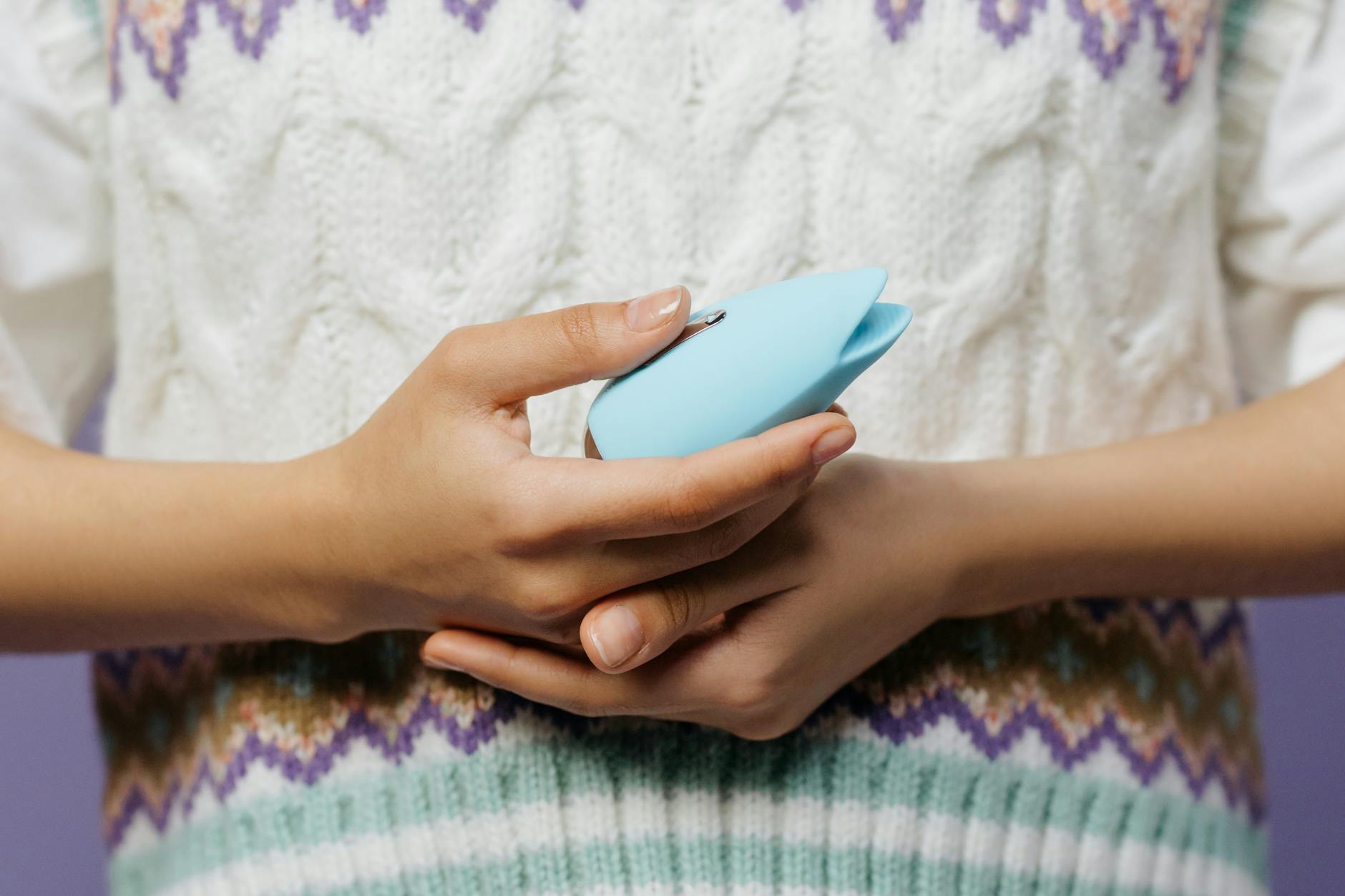
How to Use Lemon Vibrators When Your Body Needs More Stimulation Than Usual
What feels perfect one year might feel insufficient the next. Here's why sensation requirements shift, and how lemon clitoral vibrators meet you where you actually are.
Honestly, the idea that your pleasure needs should stay constant your entire life is wild. Bodies change. Nervous systems adapt. What worked beautifully last year might feel underwhelming now, and that's not a problem to fix. It's information.
The shift toward needing more stimulation is one of the most common things I hear from people who've been exploring their pleasure for a while. It's not that you're broken. It's that your body has gotten better at recognizing what it actually wants.
There are several reasons your body might ask for more stimulation than it used to.
Nervous system adaptation. When you experience the same sensation repeatedly, your nervous system literally stops noticing it at the same intensity. This is called habituation. It's the same reason you stop hearing the hum of your refrigerator or feeling your shirt against your skin. Pleasure works the same way. Your system adjusts, and what once felt intense now feels like baseline.
Age and hormonal changes. If you're in your late thirties, forties, or beyond, shifting hormone levels (whether from natural aging, thyroid shifts, or other factors) can absolutely change how intensely you experience sensation. Lower estrogen, for instance, means thinner tissue in the clitoris, which sometimes requires different pressure or stimulation patterns to feel satisfying.
Relationship transitions. Moving in with a partner, ending a long relationship, or shifting the dynamic with someone you've been with for years can change what your body craves. Sometimes that means needing more intensity as a way of claiming your own pleasure. Sometimes it means you've simply relaxed into asking for what you actually want instead of what you thought you should want.
Mental load and stress. When you're overwhelmed, distracted, or carrying emotional weight, your body literally becomes harder to stimulate. Your brain isn't available for pleasure. Adding more vibration intensity is sometimes the only way to cut through the noise.
You're just getting to know yourself better. This is the most straightforward reason. Once you've had a few years of solo exploration, you know the difference between "this feels nice" and "this makes me come." You're not becoming harder to please. You're becoming more honest about what actually works.
One of the reasons lemon clitoral vibrators become a go-to when your stimulation needs shift is that they're genuinely adaptable. Unlike traditional vibrators with a fixed speed or pattern, the suction-based design of a tool like the Lem means you can:
Control intensity through positioning. With traditional vibrators, more intensity means turning up the speed or pattern. With a lemon sucker, you control how much suction reaches your clitoris by adjusting the seal and how tightly the toy cups the area. A lighter seal gives you more gentle stimulation. A firmer seal increases intensity. You're in charge of the exact pressure gradient.
Use different patterns strategically. Most lemon sexual toys include multiple suction patterns. If you've adapted to one, switching patterns gives your nervous system something new to process, which often feels fresher and more intense than simply cranking up speed on a vibrator you've used for months.
Layer stimulation. Because suction doesn't numb tissue the way high-frequency vibration sometimes does, you can use a lemon vibrator for extended periods without losing sensation. This means you can build arousal slower, stay in the sensation longer, and actually reach a higher baseline of stimulation naturally instead of forcing it through toy intensity alone.
Combine with partnered touch. A partner can provide external stimulation (kissing, finger pressure, other touches) while you use a lemon clitoral vibrator, creating layers of sensation that traditional vibrators sometimes make awkward. That layering is often what breaks through when you need more than a single source of stimulation can deliver.
If you're noticing that your current setup isn't landing the way it used to, here's what I recommend:
Start by changing patterns, not chasing harder toys. If you're already using a lemon vibrator, spend a week cycling through the patterns you normally skip. Often one of them will feel fresher because your nervous system hasn't adapted to it yet.
Extend your warm-up time. This sounds backward when you need more intensity, but going slower at first actually allows your nervous system to build arousal more fully. You're not starting already-numb. You're starting primed. That makes intensity feel sharper.
Try shorter, more frequent sessions. Instead of one long session where you're chasing the same sensation, try three shorter ones (15 minutes each) across a week. Your nervous system resets between sessions, which means the same tool feels fresh and intense each time instead of progressively dulled.
Check in with your mental state. Before you assume you need a more intense toy, notice what else is happening. Are you stressed? Distracted? Not fully present? Sometimes what feels like needing more stimulation is actually needing more presence. Meditation, breathing, or just letting your brain quiet down can completely shift what you need from a toy.
Explore partnered stimulation. If you're with someone, this is a great moment to have the conversation: "My body's asking for something different than it used to. I'd love to explore that together." A partner's hands, mouth, or attention can provide the layer of stimulation that takes you from "this works" to "oh wow, this is incredible."
Sometimes, shifting needs point to genuinely wanting something new. That's not failure. That's growth.
If your lemon vibrator still feels right but you want to add something, many people find that combining a lemon clitoral vibrator with a different type of toy (like a small internal vibrator or a wand) gives them the multi-sensory experience they're craving. You're not replacing the tool that works. You're expanding the toolkit.
If you're shopping new, this is the moment to be honest about what "more" actually means. Do you need more intensity? More surface area? More pattern variety? More sustained stimulation? The answer changes which tool makes sense. A high-frequency vibrator is different from a deeper, slower suction toy, which is different from a wand. Knowing what "more" means helps you find what actually works instead of chasing bigger numbers.
One thing to genuinely avoid: assuming that buying a new toy will solve the adaptation piece. You'll adapt to a new toy too, usually within a few months. The real skill is learning to play with patterns, positioning, timing, and presence so that you're not just chasing toy intensity but actually building a relationship with your own pleasure that evolves with you.
Here's something worth sitting with: needing more stimulation doesn't mean satisfaction takes longer. Sometimes it's the opposite. When you stop fighting against what your body actually wants and just give it what it's asking for, orgasms often become faster and more intense. You're not failing because your needs changed. You're succeeding because you're finally asking for what works.
That said, intensity isn't the same as satisfaction. Some of my clients who shifted to needing "more" found that what they actually needed was variety, not power. Different patterns, different pacing, different contexts. A lemon vibrator adapted to multiple patterns often delivers that better than hunting for the strongest toy on the market.
Completely. Your body's sensitivity to stimulation shifts based on age, stress, hormones, relationship status, and simple nervous system adaptation. If you've been exploring your pleasure for years, expecting your needs to stay constant is like expecting your taste in music to never shift. It's normal to need more, less, different, or specific kinds of stimulation at different life phases.
Not in the way most people worry. What happens is nervous system habituation, which is reversible. If you take a week or two off from vibrators, your sensitivity resets. That said, if you notice you're cycling through increasingly intense toys every few months, that's a signal to mix up your approach. Vary your patterns. Change your frequency. Build in breaks. The goal isn't to keep chasing power but to stay present and engaged with pleasure.
Lemon clitoral vibrators are actually gentler on tissue than many other toys because the suction mechanism doesn't numb through high-frequency vibration the way traditional vibrators sometimes do. The suction stimulates nerves differently, and most people find they can use them longer without the numbing sensation that shows up with other toys.
Needing more stimulation is about the intensity or type of sensation that feels good. Difficulty climaxing is when you can feel good pleasure but can't quite reach orgasm. They're related but different problems. If you need more intensity and you're reaching orgasm, that's adaptation and preference. If you need more intensity and you still can't climax, that might point to something else (stress, hormones, medication, or psychological factors) that a toy alone won't fix. That's a good moment to talk with a healthcare provider or sex therapist.
Give yourself two weeks of intentional exploration with your current tool. Try different patterns. Change your positioning. Build in longer warm-ups. Mix in partnered touch. Only after you've genuinely exhausted the ways you can use what you have should you consider something new. Most of the time, shifting needs are solved through strategy before they're solved through new gear.
Absolutely. A partner can provide manual stimulation, toy play, specific pressure or rhythm that you control, or simply presence that deepens arousal. For many people, the shift toward needing more intensity is actually a shift toward wanting more engagement with a partner, not less. Having the conversation now, before frustration sets in, is the kindest move you can make.
Your body asking for more is not a flaw. It's a signal that you're listening to yourself, that you've gotten to know what you actually enjoy, and that you're willing to ask for it. The first step isn't buying a new toy. It's understanding what "more" actually means for you. Once you know that, tools like lemon vibrators give you genuine flexibility to meet those needs without endless shopping.
If you're ready to explore this more deeply with someone who gets it, reach out. We can talk about what your body's asking for and how to honor that without overthinking it.
Masters, W. H., & Johnson, V. E. (1966). Human Sexual Response. Little, Brown.
Komisaruk, B. R., Beyer-Flores, C., & Whipple, B. (2006). The Science of Orgasm. Johns Hopkins University Press.
Georgiadis, J. R., & Kringelbach, M. L. (2012). The human sexual response cycle: Brain imaging evidence linking sex to other pleasures. Progress in Neurobiology, 98(3), 49-81.