
Let's name what's really happening
You used to get going fast. Five minutes of the right touch, and you were ready. Now it takes twenty. Maybe thirty. You're not broken. Your body isn't malfunctioning. What's changed is the timeline, and that timeline shift feels like a problem because our culture treats slow arousal like a bug instead of what it actually is: a feature of how bodies work after a certain age, under stress, or during hormonal transitions.
Here's the thing: that slower build might actually be the better entry point for lemon vibrators. Not in spite of the delay, but because of it.
Why arousal takes longer (and what it has to do with your nervous system)
Three main reasons arousal slows down, and I want to be clear about each one because the fix changes depending on the cause.
First, there's the hormonal shift. Estrogen and testosterone both influence how quickly blood flows to the genitals and how sensitive nerve endings are. As we age, or during perimenopause, or with certain medications, those hormones shift downward. Your nervous system still wants to respond, but it's getting weaker signals. It's like trying to watch a movie with the brightness turned down. The content is good. You're just seeing less of it.
Second is accumulated stress and mental load. If you're managing a household, a job, aging parents, or relationship friction, your nervous system is partly in protective mode even when you're trying to be intimate. Your brain doesn't flip a switch between "handling three different crises" and "ready for pleasure." It winds down gradually. This is not laziness. This is neurobiology.
Third is simple friction from routine. After years with the same partner, or years of solo pleasure that follows the same pattern, the pathway to arousal loses its novelty activation. Your body needs more input to signal that something new is happening.
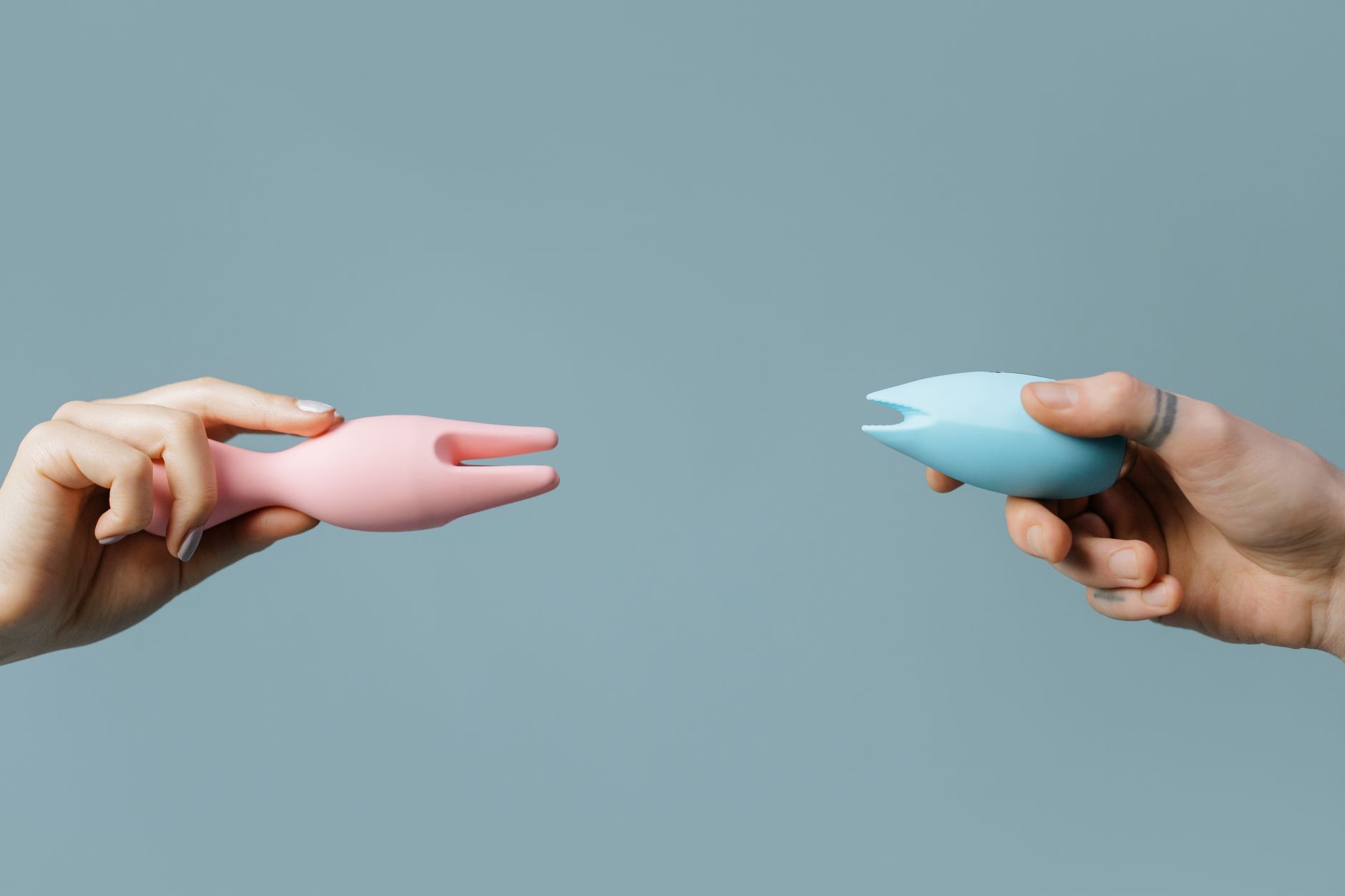
Photo by cottonbro studio on Pexels
Why lemon vibrators actually shorten the gap
Here's where lemon sexual toys, specifically their suction mechanism, change the equation. When arousal is sluggish, you need strong, consistent input to wake up the nervous system. Traditional vibrators buzz, which is pleasant. But they ask your body to respond to a familiar stimulus. Lemon vibrators use air-suction technology. That's different enough that your nervous system actually pays attention.
The suction creates a chain reaction. Your brain registers something unfamiliar happening. Blood flow increases not just locally but systemically. The sensations are stronger and more varied than straight vibration, which means you need less time for your body to cross the threshold from "paying attention" to "actually aroused."
I've worked with clients who spent 45 minutes trying to warm up with previous tools. Within two weeks of adding lemon clitoral vibrators to their routine, that time dropped to 20 or 25 minutes. Not because the body suddenly became faster, but because the tool matched the body's current capacity better.
How to use lemon vibrators when your warm-up is longer
Start before you're turned on. I know that sounds backward. But when arousal takes time, waiting for desire to show up first is a losing game. Instead, commit to 5 to 10 minutes of touch and sensation before you even reach for the lemon vibrator. That might be your partner's hands, it might be your own hands on your body, it might be a shower or a bath. The point is that you're signaling to your nervous system: something is happening here.
Then introduce the vibrator. Start at a lower intensity setting. The Lemon's lowest settings are mild enough that they feel almost gentle, especially if your body is already slightly engaged. Run it on setting 1 or 2 for at least 5 minutes. You're not trying to finish. You're building momentum.
After 5 to 10 minutes at low intensity, your body will usually have its own signals. You might feel a shift in sensation, a slight pulse in your pelvis, or simply a change in how it feels to breathe. That's when you can increase to setting 3 or 4. Give yourself another 5 minutes there before moving higher.
The whole process might take 20 to 30 minutes instead of the 5 it used to. But here's what changes: you're no longer frustrated that it's slow. You've built it into the plan. And because you're following your body instead of rushing against it, the final orgasm is often much more satisfying than the quick ones were.
The partner piece
If you have a partner, the arousal slowdown becomes a conversation, not a problem. Many partners get anxious when sex slows down. They think it means you're losing interest or attraction. What you're actually doing is telling them your nervous system needs a different approach.
Invite them into the pacing shift. This is not "I need you to wait 30 minutes every time." It's "I get there faster with longer, steady foreplay and a vibrator that feels different from what we've been using." Some partners are relieved. They thought they were doing something wrong. Others discover that the slower pace actually feels better for them too. You end up syncing in a different way.
If they're not interested in longer foreplay, that's separate information about compatibility. And it deserves its own conversation, away from the bedroom, about what each of you needs and whether you can meet in the middle.
Stress and arousal are intimately connected
If your arousal slowed down recently alongside a major life change (new job, financial worry, family stress, relationship tension), fixing it with a better vibrator alone won't work. The vibrator helps. It gives your nervous system something strong enough to interrupt the stress signal. But you also need to address the stress itself.
That might mean therapy. It might mean a serious conversation with your partner about emotional disconnection. It might mean setting better boundaries at work so you have actual mental space in the evenings. Or it might simply mean being honest that you don't have bandwidth for sex right now, and that's okay.
I see a lot of people (especially women over 40) shame themselves for not being ready as fast as they used to be. Then they add a tool. But if the underlying stress stays untouched, the tool helps less than it could. The combination is what works: addressing the life stress and supporting your body's actual needs at the same time.
When slow arousal is actually a sign of something else
I want to flag something important. If your arousal slowed down suddenly after your body or life has been relatively stable, it might be worth checking a few things. Some medications flatten sexual response. Thyroid issues, blood pressure meds, certain antidepressants. If you've recently started something new, it's worth asking your doctor whether sexual side effects are common.
Some hormonal birth control can slow arousal. If you've been on the same pill for years and suddenly notice a shift, it might not be age or stress. It might be worth talking to your gynecologist about options.
And honestly, if you've been faking orgasms for years or staying with a partner you're not actually excited about, your nervous system might finally be telling the truth. That's harder to fix with a vibrator. That needs honesty first.
What you'll actually notice after two weeks
Once you've adjusted to using lemon clitoral vibrators with the longer warm-up timeline, a few things shift. First, you stop resenting the slowness because it feels purposeful instead of like a failure. Second, your partner might notice that your pleasure is more intense (slow arousal often builds to stronger sensation). Third, you might realize that the 30-minute process is actually kind of nice. It's not a race anymore.
There's research showing that when people stop fighting their body's natural rhythm and instead work with it, sexual satisfaction goes up even if frequency stays the same. You're having fewer encounters, but better ones. That's a trade most people would take.
Questions people actually ask about slow arousal and lemon vibrators
Does arousal ever get faster again as you get used to lemon vibrators?
Sometimes, yes. The novelty of the suction mechanism means your nervous system stays engaged. Some clients report that after three to four weeks, their bodies start warming up slightly faster. But honestly, I wouldn't count on it as the main goal. The real win is that the longer timeline stops feeling like a problem. If it does speed up a bit, that's a bonus.
Can I use a lemon vibrator on lower settings if my arousal is taking forever?
Start on lower settings, yes. But you also need the warmup period before the vibrator. The combination works. The vibrator alone on setting 1, without any prior touch, might not give your nervous system enough input to register as different. Mix in manual touch, time, and then the vibrator.
If my partner has quick arousal and mine is slow, does that mean we're incompatible?
No. But it means you need an explicit conversation about timing and what works. Some couples build in "solo time" first, where each person gets themselves to a certain point of arousal before partnered sex starts. Some use vibrators specifically because they let people work at different paces simultaneously. The main thing is that you're both agreeing on the plan instead of one person waiting frustrated and the other person feeling rushed.
Does stress actually affect arousal at a physical level or is it just mental?
It's both, and they feed each other. Stress activates your sympathetic nervous system (the fight-or-flight response). That literally constricts blood vessels and pulls focus away from pleasure centers. So yes, it's physical. That's why breathing, stretching, or even a quick walk before sex can help. You're literally shifting which nervous system is active.
Are there lemon sexual toys that work better for slower arousal specifically?
The main clitoral vibrator from Shop Lemon Sexual Toys is designed to work at multiple intensity levels, which is exactly what you want when you're building arousal gradually. You're not locked into one sensation. You can start gentle and build. That matters more than having a device designed "for slow arousal." Any good lemon vibrator, used intentionally with a longer warm-up timeline, works.
What if my arousal is slow but my partner says I'm not attracted to them anymore?
That's worth exploring separately. Slow arousal can be medical, stress-related, or age-related. Lack of attraction is a different conversation. If you feel genuinely unattracted, a vibrator won't fix that. But if you're still attracted and the arousal is just slower, a vibrator combined with addressing stress and getting on the same timeline usually helps. If you're unsure, that's conversation territory, maybe with a therapist.
The honest closer
Long arousal isn't your body failing you. It's your body asking for something different. Better foreplay. A stronger tool. Less stress. More time. Sometimes all of those. Once you stop treating the slowness as a problem to solve in five minutes, it becomes a rhythm you can actually enjoy. Lemon vibrators bridge the gap between your body's current needs and actual pleasure. But they work best when you stop rushing and start working with your timeline instead of against it.
If this is a shift that's happened in your relationship or with a partner, consider reaching out to talk through the conversation side of things. That's often where the real change starts. Contact Shop Lemon Sexual Toys if you have questions about which vibrator might work best for you.