
The permission problem
Honestly? Most couples never talk about this. One partner expresses curiosity about using a vibrator during sex. The other either feels replaced, or feels like they're watching a performance instead of being intimate. Both walk away confused.
Here's what actually happens when you bring lemon vibrators into partnered pleasure with intention: you stop competing for arousal and start building it together.
Why this matters more than you think
The data is clear. Partners who integrate solo stimulation into shared sex report higher satisfaction, less resentment, and more honest communication. But here's the kicker: most couples skip the actual conversation and just hope it works out. It doesn't.
The difference between a connected experience and an awkward one isn't the toy. It's the frame you put around it before the toy ever comes out.
Setting the frame before anything physical happens
This is where most couples fail. You need three things in place before anyone touches a lemon vibrator.
First, admit it's not about replacement. Say it out loud, to your partner. A clitoral vibrator like the Lem doesn't replace what their hand or mouth does. It does something different. It's not better or worse. Your partner needs to hear this explicitly, because their brain is already writing a story that you're bored or unsatisfied. Interrupt that story early.
Second, flip the narrative from solo to shared. Stop thinking of this as "me using a toy" and start thinking of it as "us exploring something together." This is the single most important mental shift. The toy isn't a substitute for your partner. It's a third participant in what you're already doing together. Reframe it that way in conversation.
Third, agree on the actual dynamic. Do they want to touch you while you use the vibrator? Just watch? Take turns? There's no right answer, but there is a wrong answer: surprising them with it. That guarantees awkwardness.
The physical setup that actually works
Position matters more than you'd think. Here's why: if you're hunched over or twisted away from your partner, you're unconsciously signaling shame or self-consciousness. That's the opposite energy you want.
Try this instead. Sit or lie in a way that keeps your face, chest, and body angled toward your partner. Not for them. For you. This posture naturally keeps you connected and present instead of disappearing into yourself. When you're comfortable and open, they're comfortable and open.
Start with your partner touching you elsewhere. Their hands on your chest, neck, or inner thighs while you use the Lem on your clitoris creates a dialogue instead of a monologue. You're receiving pleasure from multiple sources, and your partner feels included in the experience rather than relegated to watching.
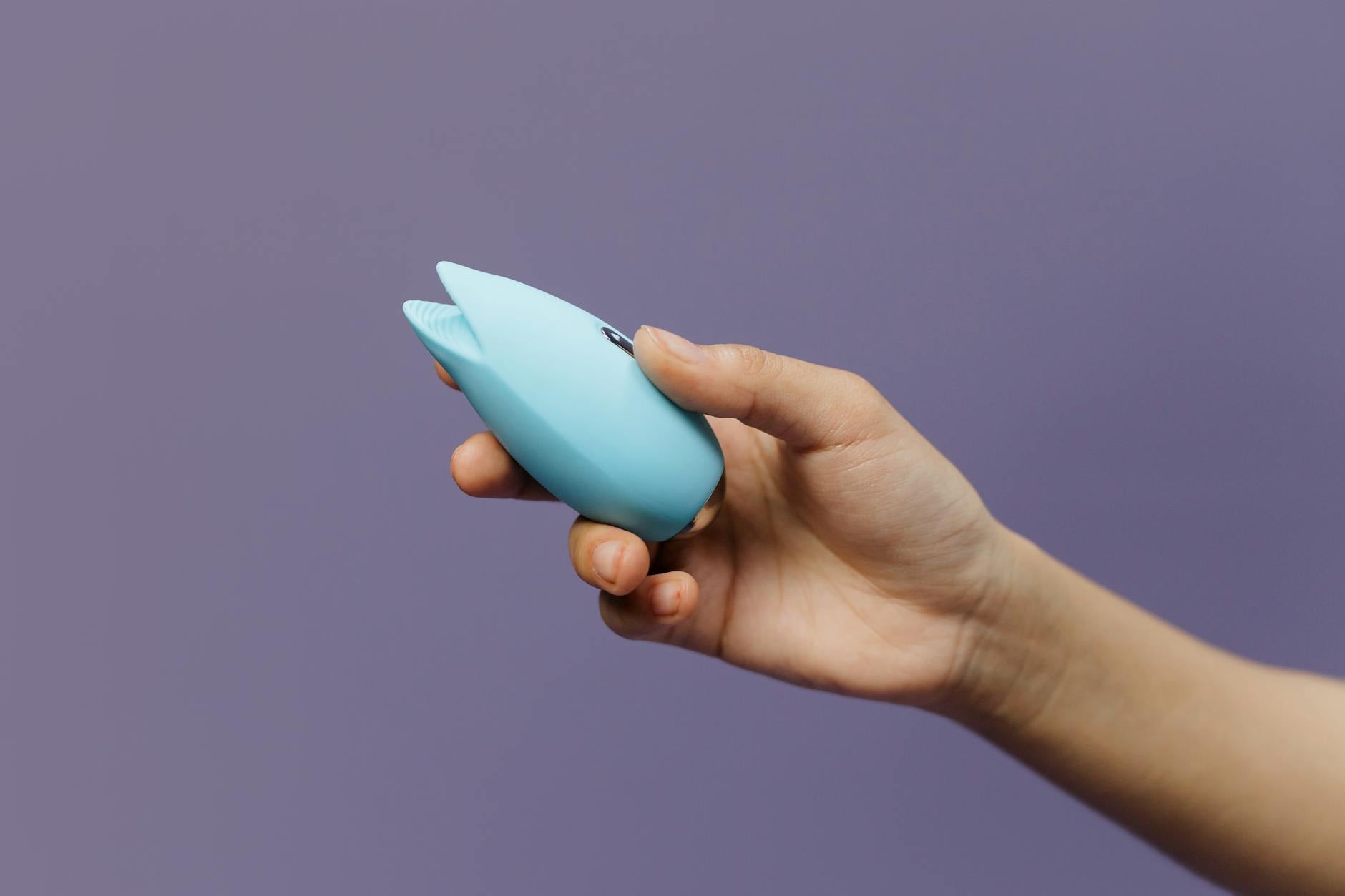
Photo by cottonbro studio on Pexels
The pacing strategy that keeps connection intact
One of the hardest parts about using a lemon clitoral vibrator with your partner watching is managing intensity. Your brain gets flooded with sensation and also aware of being watched. That's a lot of competing signals.
Start at a lower intensity than you'd use solo. I know that sounds counterintuitive, but here's the reasoning: you want to stay present with your partner, not check out into pure stimulation. Use settings 1 or 2 on a device like the Lem. This keeps you grounded and in communication mode.
Take breaks. This isn't a sprint to orgasm. Every minute or so, pause and check in. "This feels good." "I like this." "Come closer." These micro-connections keep the experience relational instead of transactional.
If you find yourself getting lost in sensation and forgetting your partner exists, that's information. It means you've found a sweet spot for solo play, but maybe not for partnered exploration yet. Dial it back. The goal here isn't to hit the hardest orgasm of your life. It's to build confidence and trust.
What to do if performance pressure creeps in
It will. You'll suddenly think, "Am I taking too long?" or "Does this look weird?" That's normal. The remedy is absurdly simple: talk through it in real time.
"I'm getting in my head." That's a complete sentence. Your partner doesn't need to fix it. They just need to know. Often, they'll respond with reassurance, touch, or a joke that breaks the tension. Voicing the anxiety out loud strips it of power.
If your partner seems uncomfortable or distant, pause everything. Ask directly. "What's going on for you right now?" Maybe they're jealous. Maybe they feel excluded. Maybe they're just not sure where to put their hands. All of those are solvable with five minutes of honest conversation. None of them are solvable with more stimulation.
Remember: the vibrator isn't the point. Connection is. If you're using the Lem or any lemon sexual toy and the vibe (pun intended) between you two is deteriorating, stop. Reconnect first. Resume later when you're both actually present.
The arousal building that works differently with an audience
Your body responds differently when someone's watching. Some people find it incredibly hot. Others find it shutdown-inducing. Both responses are valid.
If you're in the arousal-kills-me camp, the solution is pacing and patience. Spend 10 to 15 minutes on foreplay before the vibrator comes out. Let your partner bring you up to a baseline of arousal where you're already invested in sensation. Then introduce the Lem. You're not starting from zero, so the vulnerability of being watched is less jarring.
If you're in the holy-this-is-hot camp, you still want to build rather than jump to maximum intensity. Tease yourself. Use lower settings first. Let anticipation compound. Your partner gets to watch you actually enjoy the journey, not just the destination.
The clitoral vibrators work best when there's already blood flow and openness in the tissue. That takes time. Don't rush it, especially when you're self-conscious.
After the experience: the conversation that matters most
This is where couples usually drop the ball. You finish. Everyone's awkward or excited or confused. Then you never talk about it again.
Don't do that. Spend five minutes afterward, while you're still close, checking in. What felt good? What was weird? What do you want different next time? These conversations normalize the experience and also give you genuine data for better intimacy.
Your partner might say something that surprises you: "I loved watching you feel confident." Or, "I felt left out." Both pieces of information are gold. They tell you what to do differently, and they also deepen understanding of each other.
If this experience doesn't work the first time, that's fine. You're learning how to be vulnerable together in a new way. That takes iteration.
When to involve your partner in using the toy together
Once you're comfortable with them watching while you explore, the next evolution is actually partnered use. Your partner holds the Lem. They control the intensity. They decide when to pause and when to press in.
This flips the dynamic entirely. You're not performing. You're surrendering control and receiving. It's a completely different intimacy.
But don't jump there too fast. Build confidence in solo use with your partner present first. Then evolve.
The common hiccup: when jealousy or insecurity shows up
Sometimes a partner watches you use a lemon vibrator and realizes they've never made you feel that good. That's actually useful information, but it can feel threatening to them.
If this comes up, reframe it clearly. A vibrator feels good because of physics. Suction and rapid stimulation create sensations hands can't replicate. That's not a judgment on your partner's touch. It's just anatomy. You can deeply enjoy both. They're not in competition.
If your partner continues to feel threatened, that's a signal to slow down and have a deeper conversation about what's actually bothering them. Often it's not the toy at all. It's fear that you're less interested in them. Address that fear directly.
FAQ
What if I can't orgasm when my partner is watching?
You're not broken. Orgasm with an audience is genuinely harder for many people because of the vulnerability and awareness. Start with lower intensity, longer foreplay, and more breaks to check in. Some people never feel comfortable orgasming with a partner present, and that's completely okay. The goal is connection, not necessarily climax.
Should I warn my partner before using a lemon vibrator during sex?
Absolutely. Surprise integration of toys usually creates awkwardness and resentment, not excitement. Have the conversation beforehand. Explain what you want to explore and why. Give them space to ask questions and express concerns.
Can I use lemon vibrators if my partner isn't into it?
Yes, but not during partnered sex if they've expressed discomfort. Solo pleasure is your right. But if you want to explore it together and they're resistant, that's a conversation starter, not a dealbreaker. Sometimes partners just need more information about why you want to try it.
How do I know if my partner is uncomfortable but hiding it?
Look for subtle signs: tensing up, going quiet, pulling away. But also ask directly. "I want to make sure you're actually okay with this." Most partners appreciate explicit permission to voice discomfort. Don't assume silence means enthusiasm.
Is it normal to feel self-conscious even if my partner says they like watching?
Completely normal. Vulnerability takes time. Keep exploring. The more you use a clitoral vibrator like the Lem in your partner's presence, the less weird it becomes. Eventually it's just another tool in your intimate toolkit.
What if we want to try this but don't know where to start?
Begin with a conversation where both of you say what you're curious about and what you're nervous about. Then pick one specific scenario to try. Maybe it's your partner touching you while you use the vibrator. Maybe it's them just sitting nearby while you explore. Start small. Build from there.