
Here's what nobody tells you about intensity needs
You need stronger stimulation to orgasm. That's not unusual, and it's definitely not wrong. What makes it confusing is that the fitness trackers, wellness apps, and mainstream sex toy marketing are all built on the assumption that lighter is better, that sensitivity is always on a spectrum, and that you should eventually orgasm from the gentlest touch.
None of that is true. The clitoris has 8,000 nerve endings. Stimulation intensity is individual. Some bodies need sustained pressure and rhythmic pulses to fire. Others need barely-there touching. There is no hierarchy here.
But there's a practical problem: most traditional vibrators weren't designed with intensity variance in mind. They buzz at one frequency, often a light one, and that's it. When you need more, you're left holding a tool that wasn't built for your body. Enter lemon vibrators, specifically air-suction devices like the Lemon that work through rhythmic pressure rather than buzz alone.
Why suction works differently than vibration
The Lemon vibrator uses something called air-pulse stimulation. Instead of a motor vibrating side to side, it creates waves of pressure against the clitoris. Think of it like the difference between tapping your arm rapidly versus holding your hand against it and pressing rhythmically. Both create sensation, but they hit different nerve pathways.
For people who need stronger stimulation, this matters enormously. Here's why: intensity with air-pulse devices is built into the mechanism itself. You're not relying on a traditional vibrator's tiny motor spinning faster. You're getting sustained pressure that builds. The Lemon has multiple intensity levels, which means you can dial exactly how much pressure you want, then stay there without compromise.
Many clients tell me they've tried ten vibrators that felt weak or one-note, then switched to an air-suction device and finally understood what all the fuss was about. That's not because they magically want pleasure more. It's because the tool was designed for sustained intensity.
How to set yourself up for success
If you're transitioning to a lemon clitoral vibrator after using traditional vibrators or nothing at all, three things change your experience immediately.
Start with the right intensity level. Don't begin at level one thinking you'll build up. Many people who need stronger stimulation find levels one and two feel like foreplay noise. Jump to level four or five and assess from there. You can always dial down. You're not testing your body's limits; you're finding your baseline.
Use plenty of lubrication. This might seem counterintuitive. Suction devices work through pressure, not friction, so you'd think wetness wouldn't matter. But a thin layer of water-based lube reduces skin drag and lets the suction cup seal better, which actually increases the pressure sensation. More seal equals more intensity.
Give yourself 10-15 minutes. Intensity needs often correlate with needing longer warm-up time. The sustained pressure of a lemon vibrator builds arousal cumulatively. You're not looking for an instant spark. You're looking for a steady climb. Many people report that 12 minutes in, the sensation suddenly intensifies without them changing the settings. That's arousal doing its job.
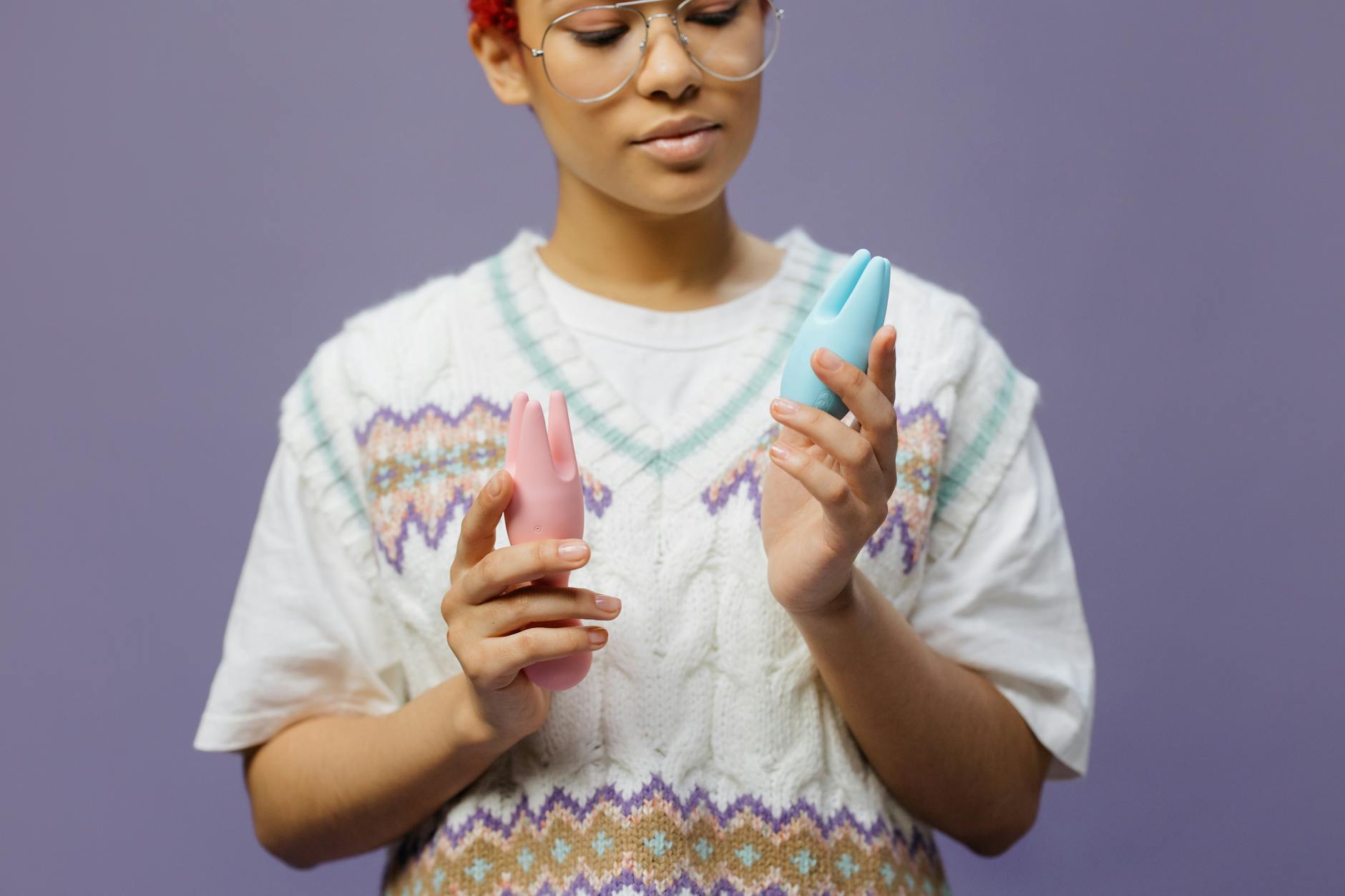
Photo by cottonbro studio on Pexels
The pattern experiment
Lemon vibrators offer multiple pulse patterns, not just on-off or intensity levels. This is where the real customization happens for people who need stronger stimulation.
Try this: start at your preferred intensity level, then cycle through each pattern slowly while paying attention to what your body responds to. Some patterns feel like steady drumming. Others pulse faster or include micro-pauses. The pattern that feels best to you is often the one that creates the right rhythm for your specific nerve response.
Honestly, most people don't experiment with patterns because they assume they're just cosmetic. They're not. A person who needs intense stimulation might find that a steady pattern feels better than a sporadic one, or vice versa. The pattern plus intensity combination is what creates your ideal sensation. Spend 30 seconds on each pattern. Notice what makes your breath catch.
If you have a partner, normalize the conversation
When you're with someone and you bring a lemon clitoral vibrator into sex, the conversation matters more than the tool. "I need stronger stimulation to orgasm" is factual information, not a critique of their touch. Some partners internalize it as "I don't feel good when you touch me," which is a completely different conversation.
Clarify: "This isn't about you. My body reaches orgasm more reliably with this intensity level. I like your touch during foreplay and after. This is an addition, not a replacement." The Lemon works solo and partnered equally well. If you're using it during sex, you might hold it or they might. Either way, it's a tool for your pleasure, not a judgment on theirs.
Many couples find that introducing a lemon vibrator actually deepens things because the person who needed stronger stimulation finally orgasms consistently, which removes a layer of frustration from partnered sex. That shift is massive.
Intensity needs and medication or health changes
Sometimes stronger stimulation needs appear or intensify because something has changed. Antidepressants, birth control, hormonal shifts, or conditions like endometriosis can all affect sensation. So can age, stress levels, or medication timing.
If you suddenly need more intensity than you used to, that's worth noting and potentially discussing with your doctor. You might not need to change medications. You might just need to acknowledge the change and adjust your tools accordingly. A lemon vibrator isn't a workaround for a medical issue. It's a tool that works with your current body, whatever that is today.
The same logic applies if intensity needs shift downward. People sometimes worry they'll always need maximum power, but bodies change constantly. What works at 35 might feel too intense at 40. What feels weak after stress might feel perfect three months later. Pay attention to your body's current state, not your historical baseline.
Common questions about intense stimulation and vibrators
Will using intense vibration desensitize me over time? This is the most common fear, and the research doesn't support it. The clitoris doesn't lose sensation from stimulation. Desensitization is typically psychological (boredom, routine, stress) or physical (health changes, medication). A lemon vibrator is a tool you use when you want it. Using it doesn't permanently change your nerve response. Many people use the Lemon for intense solo sessions and enjoy lighter touch from partners without any conflict.
Is needing intense stimulation a sign something is wrong? No. Intensity needs exist on a spectrum. Some people need barely-there touch. Others need firm, rhythmic pressure. Both are normal. Your body is not broken, defective, or overstimulated. It's just your body.
Can I use a lemon vibrator on the highest setting every time? Absolutely. There's no rule that says you need to vary intensity for health reasons. Some people prefer consistency. Use the settings that feel good to you, every single time, and let go of the idea that variety is mandatory.
What if I need intensity but also quick orgasms? Intensity and speed aren't opposites. Starting at a higher intensity level can actually speed up orgasm because you're hitting the right nerve pathways immediately. You don't have to wait for arousal to build if you know what pressure you respond to.
Do lemon vibrators feel different than traditional vibrators? Dramatically. Air-pulse stimulation is sustained pressure that builds, whereas standard vibrators are buzzing side-to-side. If you've used traditional vibrators and they felt shallow or one-note, you'll likely notice the difference immediately. It's not subtle.
How do I know if I need stronger stimulation or just the wrong tool? Try this: use whatever toy you have at maximum intensity for 10 minutes. If it still feels underwhelming, you likely need stronger stimulation. If it feels good, your baseline might just require a slightly more intense tool. A lemon clitoral vibrator bridges that gap perfectly because it starts intense and goes deeper from there.
What actually happens when the right intensity meets your body
When you're using a lemon vibrator at the intensity level your body needs, orgasm doesn't feel like a mystery anymore. It feels like inevitability. You're not chasing sensation or wondering if it'll happen. You're building toward it with clear feedback and sustained pressure that keeps you locked in the right neurological zone.
That consistency matters more than most people realize. When you know exactly what your body needs and you have a tool designed to deliver it, solo pleasure becomes reliable. Partnered sex becomes less fraught because you're not worried about whether orgasm is possible. You know it is.
If you're currently reaching for traditional vibrators and leaving them unsatisfied, or if you're using your hands and getting frustrated with the time it takes, a lemon vibrator might be the shift you need. The Lem is built for this specifically. Air-pulse technology, multiple intensity levels, multiple patterns, and sustained pressure that actually delivers when you need stronger stimulation.
Your intensity needs aren't a problem to solve. They're just information about your body. The right tool makes everything easier.
Related reading
If stronger stimulation needs are new for you, you might find it helpful to read about how lemon vibrators help when sensation feels numb after stress or burnout or how to use lemon vibrators when your clitoris feels less sensitive with age. Both cover related territory about intensity and sensation shifts.
For partnered context, how to use lemon vibrators when your partner prefers external stimulation only walks through the conversation and logistics of bringing a lemon clitoral vibrator into shared pleasure.