
Let's start with the honest part
You can reach orgasm alone. But with your partner? It's like trying to remember a phone number when someone's watching you write it down. Suddenly the knowing part gets buried under performance anxiety, distraction, and the weird psychological shift between solo pleasure and partnered pleasure.
This is not a problem with your body. It's a mismatch between what your nervous system knows it needs and what the partnered scenario is currently delivering.
Why the gap exists between solo and partnered orgasms
When you're alone, three things align. Your body is focused. Your mind is free. The stimulation is exactly what you've taught your body to crave.
Add a partner, and the variables shift. There's pressure, even gentle pressure, to orgasm on someone else's timeline. There's vulnerability in asking for what you need. There's the partner's pleasure and presence and rhythm, all competing for your brain's attention. For many people, that cognitive load kills arousal before it builds to climax.
Your partner might also not understand the specific type or intensity of stimulation you need. They might assume that because penetration feels good, it should lead to orgasm. It often doesn't. The clitoris needs direct stimulation to reach climax, and penetration alone rarely delivers that with the right pressure and pace.
This is where lemon clitoral vibrators bridge the gap.
How lemon vibrators change the partnered equation
A good clitoral vibrator, especially the precision suction design of lemon sexual toys, does three things that manual stimulation or penetration alone cannot.
First, it removes the performance burden from your partner. They're not responsible for getting you there anymore. That's psychologically huge. Your partner can focus on their own pleasure or on the intimacy itself rather than being locked into a role as your orgasm engineer.
Second, lemon vibrators deliver the exact intensity and pattern your body recognizes. You've already taught yourself what works solo. The vibrator simply replicates that in front of your partner.
Third, suction stimulation like the Lem vibrator creates a different sensation than fingers or penetration. It stimulates the clitoral nerve without the friction that sometimes feels too direct or too intense during partnered sex.
The conversation you need to have first
Honestly though, the tool doesn't work if you don't talk about it first.
Many people introduce a lemon vibrator during sex without explanation, hoping it'll feel like a natural upgrade. Usually it feels like a plot twist. Your partner might wonder if you're not satisfied with them. They might feel replaced or inadequate. The whole thing becomes awkward instead of hot.
Instead, have the conversation outside the bedroom.
Say something like: "I want to reach orgasm more often when we're together. I've realized I need more direct clitoral stimulation than we're currently getting. I want to use a vibrator during sex. This isn't about you. I want to feel more pleasure, and I want you there with me."
Then show them the lemon vibrators you're considering. Explain what you like about the sensation. Let them hold it. Make it collaborative. Some partners actually want to learn how to use it on you. Others prefer you control it while they focus on other forms of touch. Both are totally fine.
The variable that matters: you're not sneaking it in. You're inviting them into it.
How to actually use lemon vibrators during partnered sex
There are three common entry points.
During foreplay. Start using your lemon clitoral vibrator on yourself while your partner touches you elsewhere. This works beautifully. You're building arousal with the exact stimulation you need. Your partner can kiss you, touch your breasts, massage your inner thighs. You control the vibration. This often gets you to the edge faster than anything else would.
During penetration. Use the vibrator on your clitoris while your partner penetrates you. The combination of internal and external stimulation, plus the fact that you're controlling the clitoral part, often creates the conditions for orgasm. Start at a lower vibration pattern and work up. Your partner should move slowly enough that the vibration is the star, not the main event.
After penetration, as the finish. Some people need penetration to feel close and connected, but can't orgasm from it alone. Use the vibrator to reach climax after your partner finishes. This removes the time pressure and lets you focus entirely on your own pleasure. Your partner can stay close, cuddle you, watch you, be present without needing to do anything.
Whichever path you choose, start at the lower vibration patterns on the Lem vibrator. Pattern 1 or 2. You know what intensity you like solo, but the mental shift to partnered sex sometimes requires you to slow down first.
What to do if it still feels awkward
Sometimes even with conversation and the right tool, the shift feels uncomfortable.
That's normal. It takes 3 to 5 times of using a lemon vibrator during partnered sex before it feels natural. Your nervous system is learning a new pattern. Your body is integrating pleasure while your brain manages vulnerability and presence. That's a bigger adjustment than just adding a toy.
If awkwardness lingers, check three things. First, does your partner actually feel comfortable with this? If they're resistant or resentful, the vibrator won't fix that. You might need a deeper conversation or even professional support from a couples counselor.
Second, are you relaxing your pelvic floor before and during? A tight pelvic floor prevents orgasm more effectively than almost anything else. Spend 10 minutes before sex doing pelvic floor relaxation, not Kegels. Breathe deeply. Let your pelvic floor soften.
Third, are you actually present? If you're performing pleasure or waiting for it to happen, it won't. Lemon vibrators work best when you're genuinely focused on sensation, not on whether you're taking too long or whether your partner is bored.
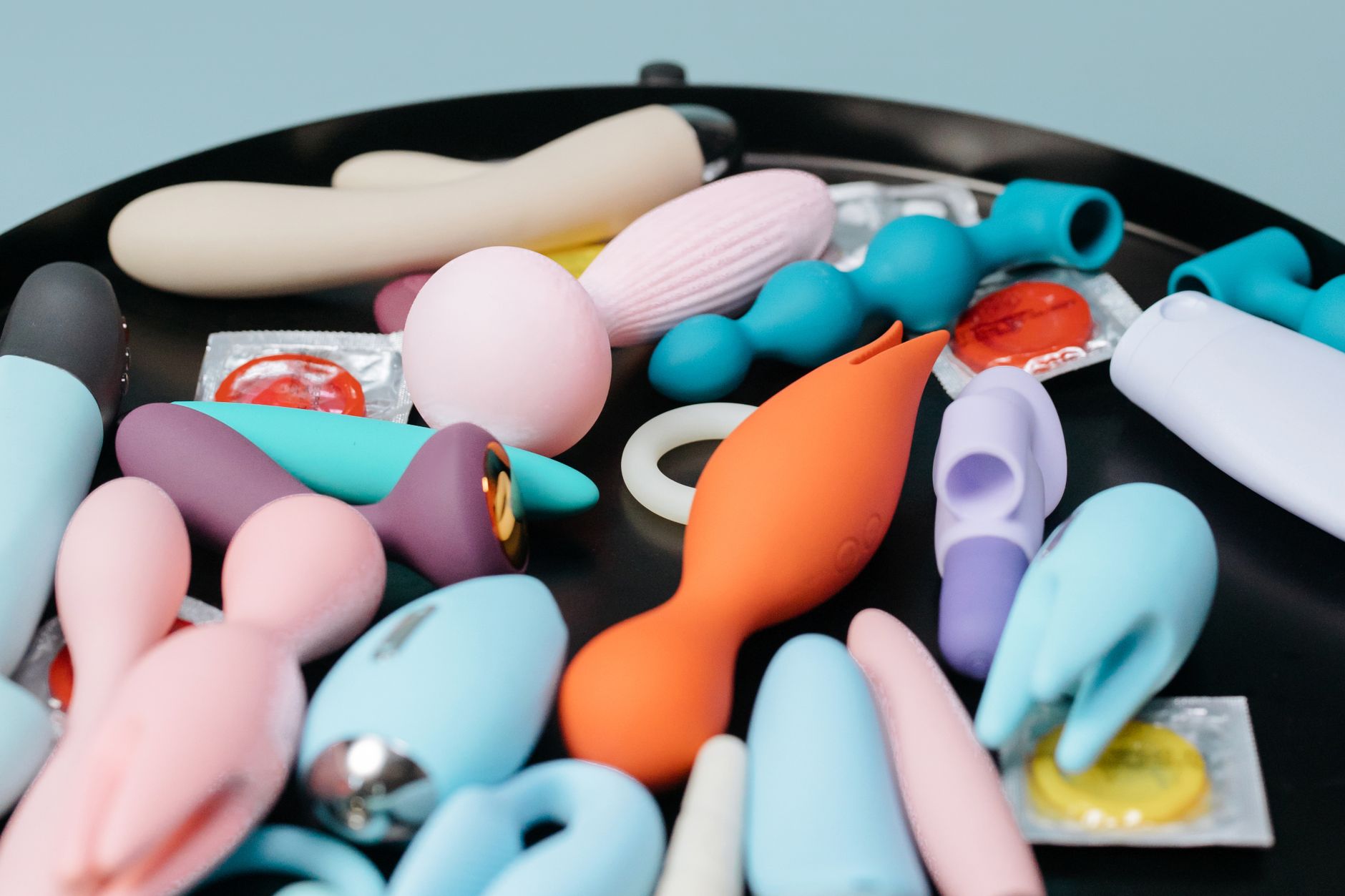
Photo by cottonbro studio on Pexels
When partnered orgasm requires more than a vibrator
Sometimes the gap between solo and partnered orgasms signals something deeper than a missing toy.
If you're unable to relax around your partner, have trouble with emotional intimacy, or feel disconnected from them, a lemon vibrator won't solve that. You might need to work on the relationship foundation first. That could mean couples therapy, or it could mean honest conversations about what's blocking you from feeling safe enough to let go.
If you have a trauma history, especially sexual trauma, reaching orgasm with a partner present can trigger protective patterns your nervous system learned long ago. A vibrator might help, but so might working with a trauma-informed therapist who can help you gradually expand your window of tolerance for pleasure and vulnerability.
If you're on antidepressants or other medications that affect sexual response, read about how lemon vibrators work when antidepressants numb pleasure. You might need to adjust timing, dosage, or technique.
The point: the vibrator is a tool for closing a physical gap. If the gap is emotional or psychological, the tool helps but doesn't replace the conversation.
The rhythm shift that actually matters
Here's something rarely discussed: partnered sex has a different rhythm than solo sex.
Solo, you control everything. Speed, pressure, timing, when to pause and when to push. Your partner, even the most attentive one, can't read your body with the same precision you can.
When you introduce a lemon vibrator, you're reclaiming some of that control. You're saying, "I need this stimulation at this intensity right now." Your partner gets to participate in your pleasure without bearing the entire responsibility for creating it.
Most partners find this actually more intimate, not less. They get to see you pursue pleasure. They get to be close while you focus entirely on sensation. The vulnerability of that, and the trust it requires, often deepens connection more than a perfect orgasm alone ever could.
People also ask
Is it normal to need a vibrator to orgasm with a partner when I can do it solo?
Completely normal. Solo sex and partnered sex engage different parts of your nervous system. Solo, you're focused. Partnered, you're managing presence, vulnerability, and someone else's body simultaneously. A tool that delivers consistent, precise stimulation helps bridge that psychological gap. You're not broken if you need lemon clitoral vibrators during partnered sex. You're just being honest about what your body needs.
Will using a lemon vibrator during sex make my partner feel inadequate?
It might, if you don't talk about it first and frame it correctly. But research shows most partners actually feel relieved. They want you to orgasm. They understand that penetration or manual stimulation alone doesn't always get there. When you introduce a lemon sexual toy as a collaborative tool, most partners feel included and grateful, not replaced.
How do I know which lemon vibrator pattern to use during partnered sex?
Start lower than you'd go solo. Pattern 1 or 2 on the Lem vibrator. Your arousal state is different with a partner present, and your nervous system needs time to adjust. You can always increase intensity, but starting too high often creates overstimulation or numbing. Experiment across a few sessions. Your ideal pattern during partnered sex might be different from your solo go-to.
What if I can reach orgasm with a partner but it takes forever?
Your timeline might genuinely be longer with a partner, and that's okay. But if it's taking 45 minutes when solo takes 10, the vibrator usually helps. The specific suction stimulation of lemon vibrators replicates what your body learned solo, which can significantly shorten the path to climax.
Can I use lemon vibrators if my partner doesn't want to participate in partnered sex the way I do?
Yes. You can use the vibrator solo while maintaining physical closeness, or you can use it in the way your partner is comfortable with. The goal is your pleasure and your connection, not forcing a specific script. If your partner actively resists your pleasure tools, though, that's worth exploring together or with a counselor.
How often should I use lemon clitoral vibrators during partnered sex to see results?
Consistency matters more than frequency. Using a lemon vibrator every time you have partnered sex for four to six weeks helps your body integrate the new sensation and your nervous system adjust to pleasure in a partnered context. After that, your own rhythm emerges. Some people use it every time. Others use it occasionally and find they can reach orgasm without it more often than they could before.
The bottom line
The gap between solo and partnered orgasms is real. It's not a failing. It's your nervous system doing its job, which is to keep you safe by staying slightly alert when another person is present.
Lemon vibrators close that gap by removing the performance pressure from your partner and delivering the precise stimulation your body already knows. They work best when you've had the conversation first, when you're relaxed, and when you give yourself permission to focus entirely on sensation.
Your pleasure matters. Your partner's presence in your pleasure matters. And the tool that helps you hold both of those at once is worth using.
Ready to explore? Start the conversation with your partner, pick a lemon vibrator that feels right, and give yourself at least a few sessions before deciding whether it's working. Bodies and relationships need time to adapt to new patterns.
If you're still stuck, reach out. Sometimes talking through the specific friction points with someone trained in this helps clarify what's actually blocking you.
Your pleasure deserves the same attention you give everything else in your life. It's time to demand it.