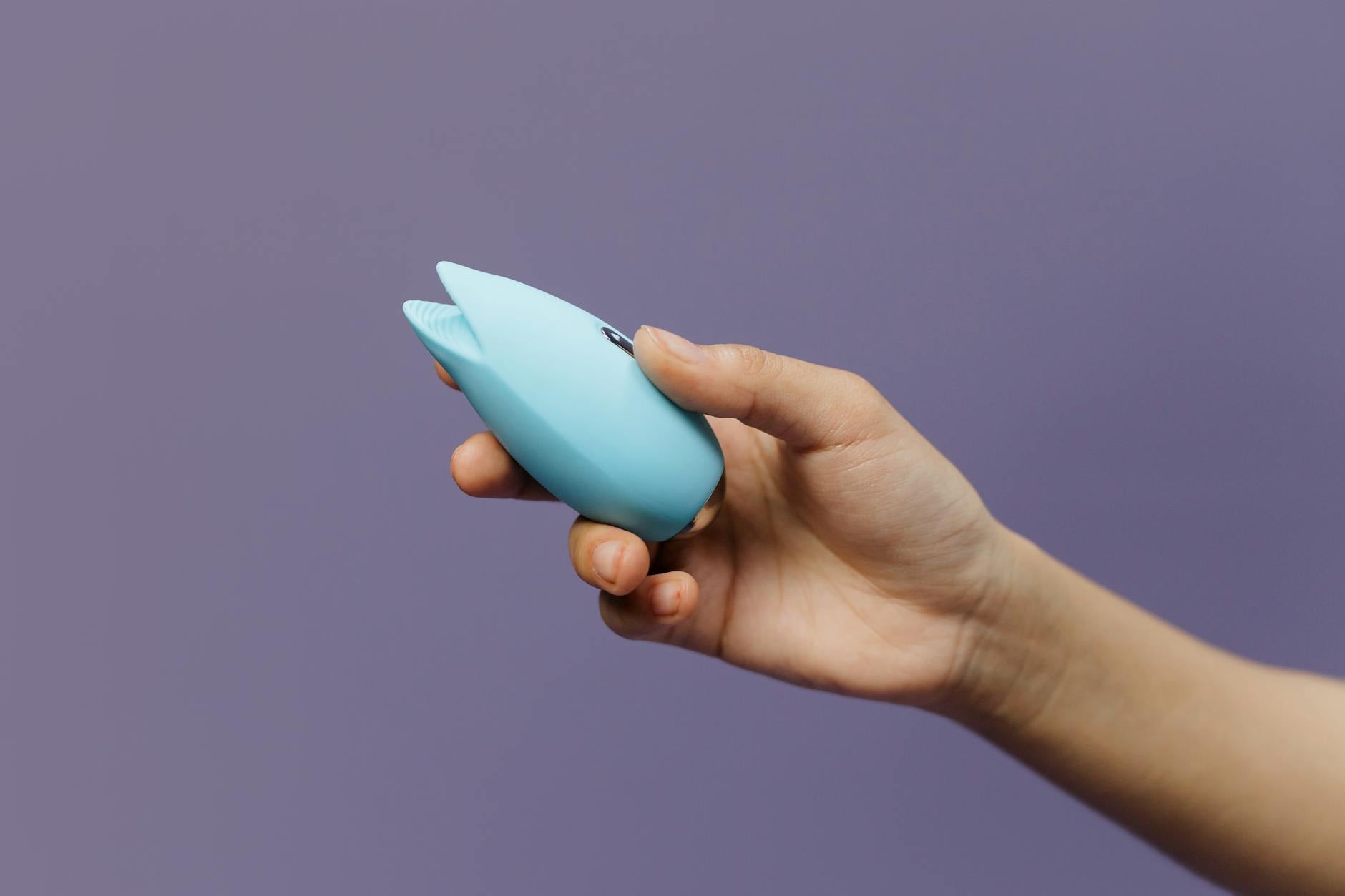
Here's the thing about new relationships and toys
You've met someone. The chemistry is good. The connection feels real. And somewhere in the back of your mind, you're thinking about introducing something you love—maybe a lemon clitoral vibrator or another tool that's been part of your pleasure for years—but you're completely unsure how they'll react.
Will they feel threatened? Will they think you're not satisfied with them? Will the moment dissolve into awkwardness and never recover?
These questions are normal. What's not normal is letting them stop you from honest communication about your pleasure.
The hidden cost of hiding what you want
Here's what I see in couples therapy: people who skip the conversation about pleasure preferences early on often end up in one of two places. Either they resent their partner for not knowing what they need (which isn't fair—they never said), or they lose touch with their own pleasure entirely because staying connected to their partner feels more important.
Neither outcome is good for the relationship.
When you introduce a tool like a lemon vibrator with a new partner, you're not just adding a physical object to the bedroom. You're modeling that pleasure conversations are safe, that you have agency, and that your needs matter alongside theirs. That's actually foundational to long-term intimacy.
Why the timing and framing matter more than the toy itself
The first time you bring it up should NOT be in the moment, clothes off, mid-foreplay.
Instead, pick a calm time—maybe a lazy Sunday morning, after dinner, whenever you two are relaxed and talking naturally. The goal is to normalize the conversation before there's any pressure or expectation attached.
Your framing should do three things:
1. Center your own pleasure, not theirs. Say something like, "I've been using this tool for years because it feels amazing. I'd love to explore it together sometime, but no pressure." Not "I need this because you can't do it alone" or "I want to see if this will make me orgasm faster." The second versions create pressure; the first creates curiosity.
2. Make it about exploration, not evaluation. Avoid language that sounds like a test of their performance. Don't say, "Let's see if I can come with you in the room." Do say, "I'm curious what it would feel like to use this together. Would you want to try?"
3. Give them a real out. And mean it. "I love this, and I'd love to share it with you, but if it doesn't feel right for you, that's okay too." If you're willing to drop it if they're genuinely uncomfortable, you're already building trust.
What to do if they're hesitant
Some partners will immediately be excited. Some will need time. Some will have fears that sound like objections but are actually insecurity dressed up in different words.
Common hesitations:
"Won't that replace me?" This usually means: "I'm worried I'm not enough."
Response: "You're not in competition with a tool any more than a vibrator is in competition with you when you use it alone. We're different things. I want both."
"Isn't that kind of weird?" This usually means: "I don't have a reference point for this."
Response: "It felt weird to me at first too. Want to watch me use it? No obligation. Just so you see it's not scary."
"I thought you just wanted me." This usually means: "I'm not sure what you actually want from me."
Response: "I do want you. I also want pleasure. And I can want both at the same time. The two aren't mutually exclusive."
Notice what none of these responses do: they don't apologize for your desire. You're not wrong for wanting this. You're not selfish. You're not broken.
How to actually introduce it the first time
If your partner has agreed to try, here's the path that tends to work:
Step one: Let them see it outside the bedroom. Hand them the lemon vibrator. Let them hold it, feel the weight, ask questions. "It's shaped like this because... The vibration pattern is..." Normalize it as an object. Many people's fear dissolves when they realize it's not some mysterious thing.
Step two: Use it solo while they're present. Not as a show, not for their benefit. Just matter-of-fact. You're doing your thing, they're next to you, no performance energy. This removes the mystery and also lets them see that you're not losing your mind—you're just enjoying yourself.
Step three: Invite them to participate, but low-key. Maybe they hold you, or kiss you, or just watch. Maybe they use it on you. Start with what feels least threatening to them. If they're nervous, starting with them in control of the toy often helps—it keeps them from feeling passive or left out.
Step four: Assume nothing. Not every session will include the toy. Not every session needs to. The point is that it's available and normal, not that it's required or essential to your pleasure.
When comfort levels genuinely don't align
Sometimes, despite good communication, you and your partner genuinely don't have the same comfort level with toys. Maybe they grew up with messaging that sex toys are taboo. Maybe they've been hurt before and feel threatened. Maybe they're just not interested—and that's allowed.
If you're someone who loves lemon vibrators or other pleasure tools, you have options:
You can use them alone. Your solo pleasure doesn't require your partner's approval, and maintaining that is actually healthy for the relationship.
You can compromise: maybe you use it sometimes, and when you're together, you focus on partnered sex without it. Not as punishment. As a rhythm that respects both of you.
You can revisit it later. Sometimes people need time. Sometimes a conversation that lands terribly in month two lands completely differently in month eight.
Or, honestly, you can recognize that a fundamental mismatch in pleasure values might matter more than you initially thought. That's information too. Better to know now.
The real conversation underneath
Introducing a lemon clitoral vibrator or any tool with a new partner isn't really about the toy. It's about answering a deeper question: "Can I be fully myself with you?"
When you handle this conversation with honesty—not aggression, not apology, just clarity—you're testing the relationship's capacity for intimacy. And you're learning something important about whether this person can meet you where you are.
The partners who respond with curiosity instead of defensiveness, who ask questions instead of assuming, who can separate "my partner enjoys something I didn't invent" from "my partner doesn't want me"—those are usually the partners worth building with.
A lemon vibrator isn't a threat to a good relationship. It's a tool that works best in a relationship where pleasure conversations are actually possible. If your new partner can handle that conversation, that's a green flag.
People also ask
How do I bring up vibrators with a new partner without making it weird?
Pick a calm moment outside the bedroom and frame it as something you love about yourself, not something you need from them. Try: "I've been using this for years and it feels amazing. I'd love to share it with you sometime, but no pressure." The key is removing judgment and keeping it low-stakes.
What if my new partner thinks vibrators mean I don't want them?
That's a fear, not a fact. You can say directly: "I want you and I also want pleasure. Those aren't in competition." If they struggle with this belief, it might point to insecurity worth exploring together. A therapist can help if this becomes a pattern.
Can I use a lemon vibrator during partnered sex even if my partner seems uncomfortable?
You can, but it's worth checking in first. If they genuinely don't want it, using it anyway creates resentment. However, if they're just nervous, sometimes experiencing it removes the discomfort. There's a difference between "I don't want this" and "I'm scared of this." The first is a boundary; the second might shift with familiarity.
Should I hide my vibrator if my new partner isn't ready?
No. Your pleasure doesn't require permission. You can use your tools alone without apology. What matters is honesty—not hiding it, but also not forcing it into partnered time before they're ready. The hiding creates shame, which is the opposite of what you want.
What if we try it together and it kills the mood?
First time introducing anything new sometimes feels awkward. That doesn't mean it won't work later. You can laugh, put it away, and come back to it another time. Low pressure is the whole point. If it consistently kills the mood, then it's not the right fit for partnered sex, but that doesn't mean it's wrong for solo play.
How do I know if a partner's discomfort is a dealbreaker?
Ask yourself: Can I be fully myself in this relationship, or am I shrinking to fit? If you're losing touch with your pleasure, your desires, or your sexuality to keep peace, that's information. You deserve a partner who's curious about you, not just tolerant of you. That doesn't mean they have to love toys—it means they need to love you enough to want to understand what brings you joy.
The bottom line
Introducing lemon vibrators or any pleasure tool to a new partner is fundamentally about trust. Trust that your desires are valid. Trust that your partner can hear them without defensiveness. Trust that pleasure conversations strengthen relationships instead of threatening them.
When you approach it with honesty, patience, and no apologies for wanting to feel good, you're already building something real.
If you need support navigating relationship dynamics around pleasure and intimacy, reach out to us. We're here to help.
References
Gottman, J. M., & Silver, N. (2015). The Seven Principles for Making Marriage Work. Harmony.
Perel, E. (2018). Mating in Captivity: Unlocking Erotic Intelligence. HarperCollins.
Kaplan, H. S. (1979). Disorders of Desire and Other New Concepts and Techniques in Sex Therapy. Brunner/Mazel.