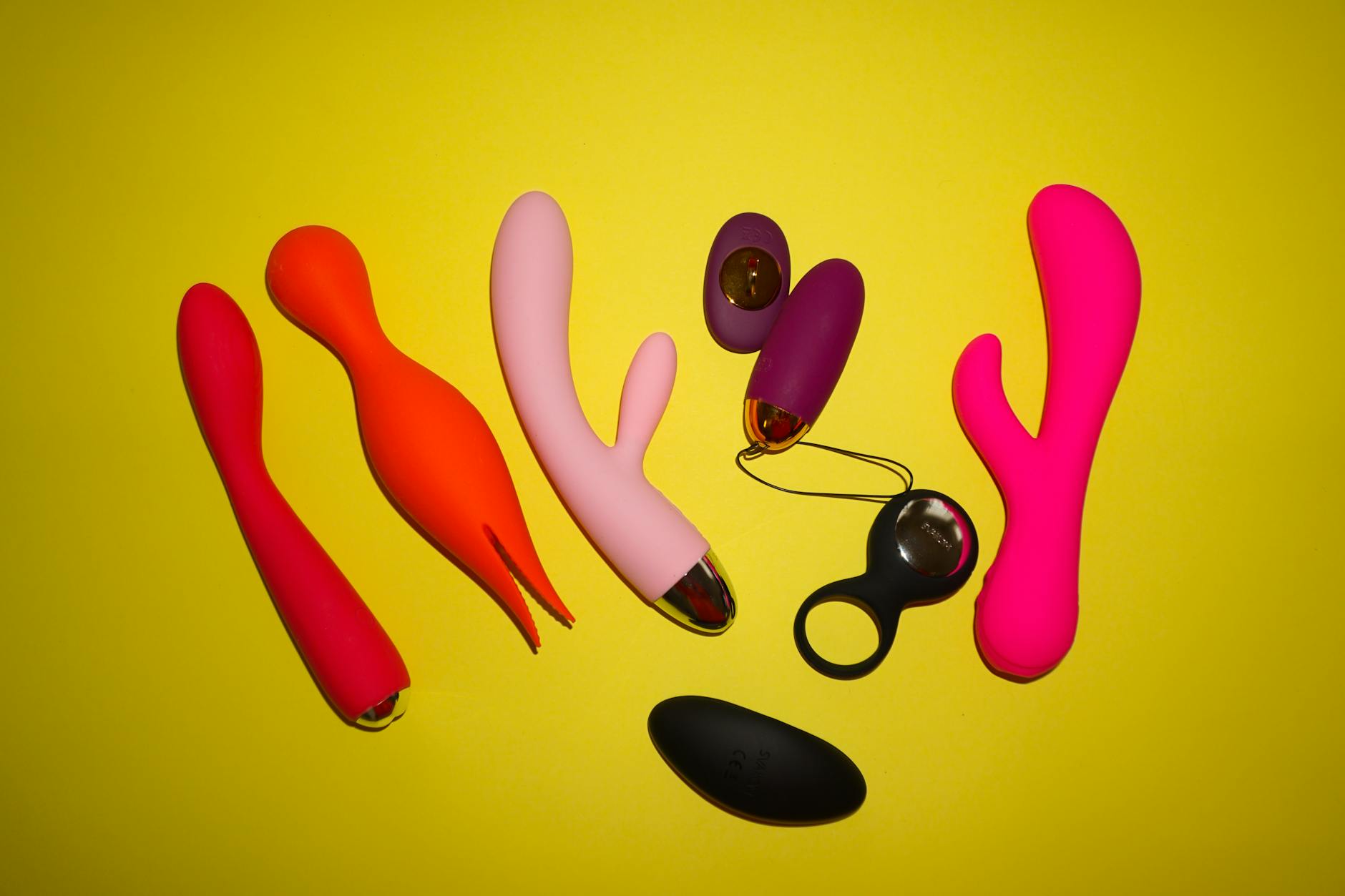
Let's talk about the guilt nobody names
You're alone. You have time. Your body wants touch. And instead of reaching for a lemon clitoral vibrator or any tool that might actually feel good, you're wrestling with a voice in your head saying you shouldn't. That guilt is so common it barely registers as unusual anymore. It's just the background noise of being socialized to believe that pleasure on your own terms is somehow less legitimate than pleasure shared with someone else.
Here's what I know after years of working with couples and individuals: the guilt isn't about masturbation itself. It's about permission. And permission is something you can absolutely rebuild.
Where guilt about solo pleasure actually comes from
Most of us grew up getting exactly zero messages about masturbation being normal. We got silence. We got shame. We got the sense that your body's capacity for independent pleasure was something to hide, manage, or eventually transfer to a partner as proof you were healthy.
Then there's the performance culture overlay. If you're partnered, solo pleasure can feel like a referendum on the relationship. "Why am I doing this alone when I have a partner?" "Am I being unfaithful?" "Should I want them more than I want this?" These questions are actually the same guilt in different packaging. They all assume that your private pleasure needs to justify itself to someone else's expectations.
Add religion, family messaging about women's sexuality, or just the general cultural narrative that women's bodies exist partly for others' enjoyment, and you've got a perfect storm for feeling like touching yourself is selfish or broken.
Here's the part they don't tell you: solo pleasure is not a consolation prize. It's foundational.
Why solo pleasure matters for your relationship (yes, including partnered sex)
I've worked with couples where one partner refused to masturbate because they thought it meant something was wrong with the relationship. Usually the opposite was true. The person who couldn't access their own pleasure independently was actually the one struggling more in partnered sex.
When you know your body. When you've explored what actually makes you feel good without worrying about someone else's rhythm or needs. When you've given yourself permission to be fully selfish about your own pleasure. That foundation transforms partnered sex. You're no longer trying to figure out what you want in real time while managing someone else's needs. You already know.
It also solves the resentment problem. Some people turn down a partner's advances and then feel guilty for days. Other people say yes when they don't want to, and harbor silent anger. Neither of these is a failure of desire or the relationship. Both are usually a failure of solo exploration.
When you're comfortable with solo pleasure, you don't need your partner to complete you sexually. You want them. That's a completely different energy.
The reframe that actually works
Stop calling it masturbation for a second. That word carries all the baggage.
Instead: this is self-care. This is medical. This is research. This is reclaiming your body as yours.
When you use a lemon clitoral vibrator alone, you're not doing something shameful that you hide. You're getting to know your nervous system. You're releasing endorphins and dopamine. You're literally telling your body that you believe it deserves attention. That's revolutionary for a lot of people.
Partners who struggle with guilt often say things like, "I feel like I should want my partner to do this instead." Okay. But they're not here right now. Your body is. Your body is here, and it deserves someone's attention. That someone is you.
How to actually start (without the spiral)
First: give yourself explicit permission. Not in a vague way. Actually say it out loud or write it down. "My pleasure matters. Using a lemon vibrator alone is healthy and normal. I deserve this."
Second: remove the stakes. Solo pleasure doesn't have to lead to orgasm. It doesn't have to be a performance or a test. It's just time you're spending with your own body.
Third: create space. Pick a time when you won't be interrupted. Close the door. Put your phone on silent. This isn't multi-tasking. This isn't something you do while checking email. This is intentional time, which makes it real time, which is a form of self-respect.
Fourth: use a tool that removes the friction of shame. This is where the Lemon and other clitoral vibrators shine. They're designed to feel good. They do one job really well. They're not about trying harder or lasting longer or performing. They're about sensation.
Start on pattern one or two. Focus on the sensation, not the outcome. If you find yourself thinking about whether this is okay or what your partner would think, that's normal. Notice the thought and come back to your body.
The guilt that shows up mid-session (and what to do)
Sometimes people get into solo time and then the guilt floods in halfway through. You're feeling good, and suddenly your nervous system flips. Maybe you're thinking about how much time you're "wasting." Maybe shame is creeping in. Maybe you're worried someone will find out.
If that happens, pause. Take a breath. Then make a choice: you can stop, and that's fine. Or you can acknowledge the thought without believing it. "I'm having the thought that this is wrong. That thought isn't true. My body deserves this." Then come back to the vibrator.
Over time, the guilt gets quieter. Not because you're doing anything wrong, but because you're building evidence for yourself that pleasure is safe.
When you're partnered and the guilt hits harder
If you're with someone and you feel guilty about solo pleasure, there are a few things happening at once. First, there's the cultural guilt we already talked about. Second, there might be real relationship dynamics at play.
Honestly though? Solo pleasure and partnered sex aren't in competition. A partner who isn't comfortable with your solo time might have their own stuff to work through. That's a conversation, not a reason to deny yourself. You can say, "I masturbate because it helps me know my body and it actually makes me better at pleasure with you. This isn't about you."
Some partners even want to be involved, which is a completely different thing. But that's optional too. Your solo time is yours.
Building a relationship with your own pleasure
Using a lemon vibrator isn't a one-time experiment. It's a practice. It's learning to trust that your body's signals matter. It's understanding what feels good versus what you think should feel good. It's separating your pleasure from performance.
The more you do this, the less room guilt has to live. Because you're not sneaking anymore. You're not doing something you're not supposed to do. You're taking care of yourself.
Start small. Give yourself permission. Use a tool that works. Notice what feels good. Come back to it.
Your pleasure is not selfish. It's essential.
People also ask
Is it normal to feel guilty about masturbation as an adult?
Completely normal. A lot of people grew up with messages that made solo pleasure feel taboo or shameful. That conditioning doesn't just disappear when you turn eighteen. It takes active rewiring. The fact that you're noticing the guilt and questioning it is already a step. Many people stay stuck in it forever.
Can using a clitoral vibrator help me overcome guilt about solo pleasure?
Actually yes. When you use a tool that's designed for pleasure and it feels objectively good, it's harder to sustain the shame narrative. The vibrator does the work. Your body responds. There's less room for your mind to argue that you're doing something wrong. Plus, tools like the Lemon feel good quickly, which means you're not spiraling for hours.
Should I tell my partner that I use lemon vibrators alone?
That depends on your relationship. Some people are very open about it. Others prefer privacy. The important thing is knowing that you don't owe anyone access to or approval of your solo time. If you want to tell your partner, you can. If you don't, that's also fine. What matters is that you're not hiding it from yourself anymore.
Will masturbation make me want my partner less?
No. In fact, the opposite is usually true. When you're comfortable with solo pleasure, you're not desperate for partnered pleasure. You don't need it to feel complete. That makes partnered sex better because you're choosing it, not needing it. You show up differently.
How often should I use a vibrator alone?
As much as you want to. There's no quota. Some people use one daily. Some use one a few times a week. Some use one sporadically. It's about what your body wants and what fits your life. The only wrong frequency is the one you're doing out of obligation instead of desire.
What if I orgasm too quickly when I use a vibrator?
That's not a problem to solve. Quick orgasms are still orgasms. You're allowed to have them. If you want to extend the experience, you can pause between patterns or take a break and come back. But there's zero requirement for marathon sessions. Your pleasure is valid at any speed.
The bottom line
Guild around solo pleasure is taught. That means it can be untaught. You don't have to spend the rest of your life managing shame about touching your own body. You can actually claim pleasure as yours. Use a lemon vibrator. Set a boundary around your solo time. Notice how your body responds. Repeat.
If guilt keeps showing up, that's information. Maybe you need to talk to a therapist about where that messaging came from. Maybe you need to have a conversation with your partner about boundaries. Maybe you just need more permission slips from yourself. But you deserve to get there. Your pleasure is not negotiable.