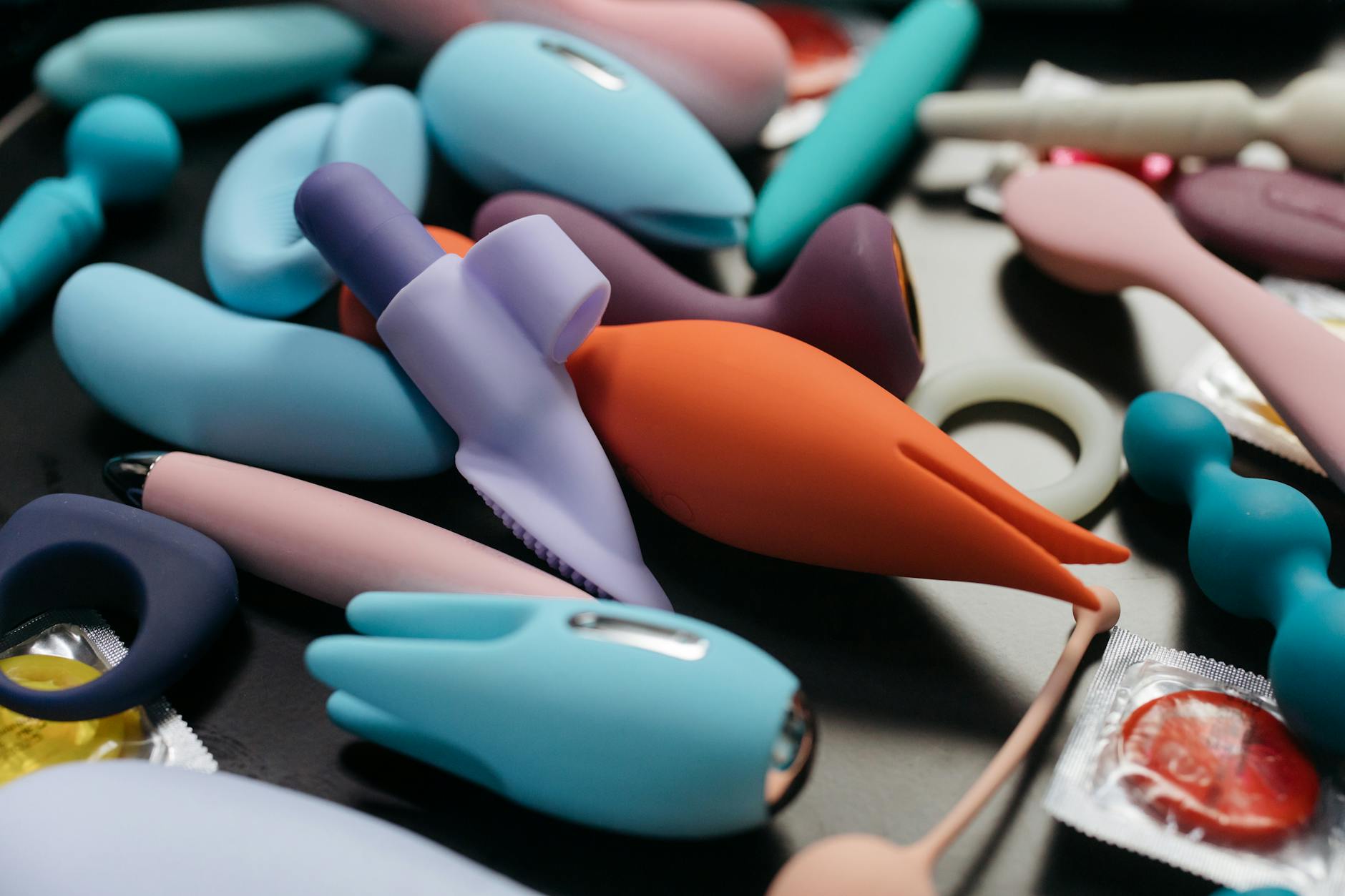
Let's talk about what hormonal shifts actually do to pleasure
Hormones don't kill pleasure. They redirect it. And that's the whole conversation most people get wrong. When estrogen and testosterone fluctuate, your body's ability to respond changes shape. It doesn't disappear. For a lot of people, understanding this distinction turns frustration into something entirely different.
Here's the honest part: your tissue thickness, lubrication speed, and orgasm intensity absolutely shift when your hormones move. But the neural pathways that drive desire and sensation? They're still there. The clitoris still has all its nerve endings. Your brain still fires when aroused. You're not broken. You're working with new parameters.
How estrogen and testosterone actually change sensation
Estrogen does heavy lifting for genital tissue. When it drops, vaginal and clitoral tissue gets thinner. This matters for two reasons. First, thinner tissue is more vulnerable to irritation from friction alone. Second, it changes how quickly your body can build arousal. Imagine trying to warm up a smaller room. The radiator still works. It just takes a different approach.
Testosterone gets less press, but it's crucial for libido across everyone with ovaries. When it dips, desire can feel quieter. Not absent. Quieter. That's different from broken, and it changes how you'll want to use a lemon vibrator or any other toy.
Progestin and other hormonal contraceptives can do the same thing. Even stress hormones matter. Chronic cortisol elevation flattens arousal response because your nervous system is literally stuck in alert mode. You can't orgasm your way out of that until your system believes it's safe.
Why lemon clitoral vibrators need a different warm-up when hormones shift
When tissue is thinner and sensation feels muted, diving straight into intensity backfires. You'll either get irritation or feel nothing, and then blame yourself. Don't.
Instead, start lower and slower. If you normally begin at pattern 4 or 5 on a lemon vibrator, try patterns 1 or 2 now. Stay there for longer. Give your body 15 to 25 minutes to build arousal instead of 5 to 10. This isn't weakness. This is strategic.
Water-based lubricant isn't optional anymore, even if you've never needed it before. Thinner tissue absolutely benefits from external lubrication. It protects the tissue, reduces irritation, and paradoxically speeds up arousal because you're not working against friction.
The pelvic floor piece most people skip
When hormones drop, your pelvic floor tightens. Estrogen helps muscles relax. Less estrogen means tighter, more rigid baseline tension. This creates a problem: a tight pelvic floor blocks sensation and makes orgasm harder to reach.
Kegels feel helpful because they're something to do. But what you actually need is the opposite. Practice relaxation. Deep breathing into your lower belly. Progressive muscle relaxation where you deliberately tense and then release your pelvic floor. Yoga poses that open the hips. When you use your lemon vibrator or lemon sexual toy, practice releasing rather than gripping.
This takes practice, but it's the fastest way to recover sensation when hormones have muted things.
The mental-emotional layer that nobody discusses
Hormones don't live in a vacuum. When estrogen drops, progesterone can spike, bringing fatigue and mood changes. When you're tired and frustrated, pleasure isn't a priority your nervous system will allow. Your brain filters it out before your body even gets the chance to respond.
This is why it matters that you're not just adjusting your vibrator settings. You're also protecting mental space for pleasure. Setting a timer to disconnect. Choosing a time when you're not running on fumes. Having a conversation with a partner about what's shifting so it doesn't become a point of resentment.
One client described it like this: "My body didn't stop wanting pleasure. My exhausted brain just stopped letting it through." Once she fixed the exhaustion piece, lemon vibrators worked again. Same toys. Different conditions.
When to suspect you need more than technique adjustments
If pain appears during sex or solo play, don't tough it out. Genitourinary syndrome (the fancy term for hormone-related thinning) is real and very treatable. A gynecologist trained in menopause medicine or hormone health can often help with topical estrogen therapy that doesn't get absorbed systemically.
If desire has flatlined completely and isn't returning after a few weeks of lower stress and better sleep, that's worth discussing with a doctor. Sometimes testosterone therapy, thyroid work, or adjusting other medications unlocks things.
If arousal takes forever but orgasm feels good once you get there, you might just need more warm-up and permission. That's solved with lemon clitoral vibrators and patience, not medicine.
How to adjust your lemon vibrator routine specifically
Five concrete changes that help most:
-
Start at lower intensity and stay there longer. Don't treat it as a warm-up to a higher setting. Some of your most intense orgasms might come from patterns you used to skip.
-
Use lube even if you don't think you need it. Water-based. Always. It protects tissue and reduces the friction that can feel uncomfortable when tissue is thinner.
-
Build in longer foreplay. Lemon vibrators work best when your body has actually started arousing. That takes longer now. Twenty minutes is not excessive.
-
Pay attention to your pelvic floor separately. If you notice you're gripping during sensation, pause and breathe. Relaxation often unlocks sensation that tightness was blocking.
-
Track what works and what doesn't. Hormones cycle for many people and shift over seasons even without a cycle. What worked last month might feel different now. That's not failure. That's information.
The part about pleasure that stays the same
Here's what hormonal changes don't touch: your brain's capacity for pleasure. The neural pathways for arousal. Your ability to experience satisfaction. The clitoris with all its thousands of nerve endings. The fact that you deserve this, regardless of what your hormones are doing.
Many people report that their most intense and satisfying orgasms come after major hormonal shifts. This isn't accident. Once you're over the initial frustration of things feeling different, you often find yourself exploring more slowly, more intentionally, more in tune with what actually works for your body right now instead of what worked five years ago.
Lemon vibrators and lemon adult toys are built for precision stimulation. They work beautifully when hormones shift because they deliver consistent sensation without requiring you to build as much natural lubrication or arousal momentum as older vibrator styles. Understanding that isn't a workaround. It's using the right tool for your current reality.
FAQ
Why do clitoral vibrators feel less effective when my hormones change?
When estrogen drops, clitoral tissue becomes thinner and less engorged with blood. This means sensation requires more deliberate, consistent stimulation and often takes longer to build. Your lemon clitoral vibrator hasn't stopped working. Your body is simply processing stimulation differently. Lower intensity patterns actually work better because thinner tissue is more sensitive to pressure, not less.
Can I use the same lemon vibrator patterns I used before hormonal changes?
Maybe, but probably not optimally. Most people find their sweet spot shifts to lower intensity used for longer periods. Think of it like adjusting water temperature. You're not replacing your shower. You're finding the temperature that actually feels good right now instead of forcing yourself under a stream that's too hot.
How long does it take to adjust to using lemon vibrators differently?
Two to four weeks typically. Your body needs time to learn what the new parameters are, and you need mental permission to slow down instead of forcing the old approach. By week three or four, most people find patterns and routines that work beautifully with their current hormonal reality.
Should I stop using lemon vibrators entirely if hormones are making pleasure harder?
No. That would be like stopping exercise because your fitness level changed. The solution is adjusting how you approach it, not abandoning it. Lemon vibrators often become more valuable during hormonal shifts, not less, because they deliver steady stimulation without relying on your body to generate as much natural response.
Does lube actually help when hormonal changes cause dryness?
Absolutely. Water-based lube protects thinner tissue from irritation and actually speeds arousal because you're not fighting friction. It's not a band-aid. It's solving a legitimate physical problem so your body can focus on pleasure instead of defense.
Will my pleasure come back fully if hormones shift again?
Yes, usually. But "back" doesn't mean identical. Most people find that once they understand how their body works through hormonal changes, they're actually more attuned to pleasure overall. You've learned how to listen. That doesn't disappear even if hormones do shift again.
What matters most
Hormonal changes are real, and they do alter how your body responds to stimulation. But understanding what shifts and what stays the same is the difference between frustration and adaptation. Your lemon vibrator isn't the problem. Your approach might need adjusting, and that's completely workable. Lower intensity, longer warm-up, more lube, pelvic floor relaxation, and patience. That's the formula. Your pleasure isn't gone. It's just asking for a different method, and that's something you can absolutely learn.