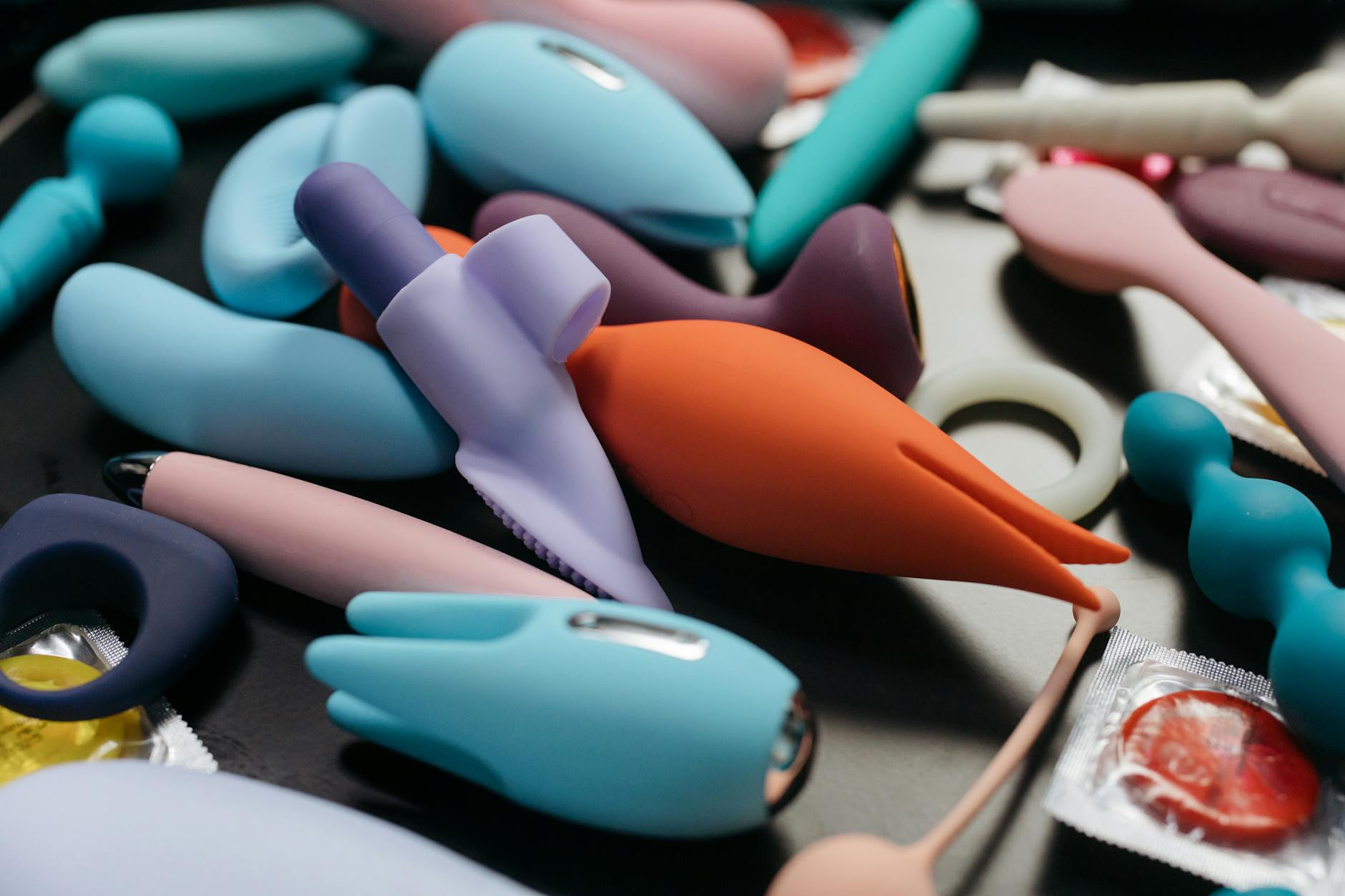
Let's talk about reclaiming your body
Sexual trauma rewires how you relate to pleasure. Not permanently. But for a while, yes. Your nervous system learned to brace when touched. Your mind learned to leave. Your body became a thing that happens to you instead of a home you live in.
Rebuilding that relationship is possible. And for many people, lemon vibrators become an unexpectedly powerful part of that reclamation. Not because a toy heals trauma. But because it gives you something trauma often took: control.
Why lemon vibrators are different for trauma recovery
Here's the thing about trauma and pleasure. Your brain doesn't separate the two. If touch became dangerous, all touch becomes flagged. That includes self-touch. So when you try to rebuild solo pleasure, your nervous system is scanning for threat. It's not being difficult. It's protecting you.
Lemon clitoral vibrators work because they're not a partner. They require zero negotiation, zero vulnerability about what happened. You control the intensity, the rhythm, the duration, the exact moment it stops. That control is not incidental. It's therapeutic.
The suction mechanism of lemon adult toys also changes the sensation profile. It's not rubbing or penetrating. It's creating a seal and releasing gentle waves of pressure. For many trauma survivors, this feels less invasive than other types of stimulation. It's a sensation your body might not have learned to fear.
And the fact that you're choosing this. That you're using your hands. That you can stop instantly. That layers of agency back into your nervous system in ways that feel small until they start compounding.
Starting slow: the first week
Don't jump straight to using your lemon vibrator on the most sensitive tissue. Instead, spend a few sessions just getting used to having it nearby.
Day one: Hold it. Feel its weight. Notice the material. Check the button without turning it on. This sounds basic, but your nervous system is still in learning mode. You're teaching it "this object near me = safe."
Day two or three: Turn it on at the lowest setting, but use it on a less sensitive part of your body first. Your inner forearm. Your collarbone. Your thigh. The goal is purely sensory. What does the vibration feel like? How does your body respond when it knows what's coming?
Day four or five: Move closer. Maybe the inner arm near your armpit, which has more nerve sensitivity but feels less loaded than genital tissue. Notice if your breathing changes. If you tense up, pause. This is data, not failure.
Day six or seven: If you're still feeling safe, you might try a few seconds on the external genital area, but nowhere near the clitoris yet. The outer labia. The mons pubis. Again, the lowest setting. You're mapping the landscape, not chasing sensation.
This timeline isn't universal. Some people need two weeks at step one. That's normal. That's actually the point. Trauma recovery doesn't reward speed.
Building tolerance gradually
Once you're comfortable having the lemon sucker near genital tissue, the next phase is increasing sensation. But "increasing" looks different for trauma survivors.
Instead of jumping from setting 1 to setting 3, spend several sessions at setting 1. Like, five or six times. You're not bored. You're training your nervous system that this sensation stays consistent. That safety compounds.
When you move to setting 2, use it for shorter bursts. Twenty or thirty seconds, then stop. Rest. Notice if any sensations came up. Did your mind wander? Did your body tense? Did you feel pleasure, even a tiny bit? All of it matters.
Many people in trauma recovery find that pleasure doesn't come first. Sensation comes first. Then comfort. Then a kind of curiosity. Then, finally, pleasure. If you're not at pleasure yet, you're not behind. You're exactly where you need to be.
Also: if at any point you feel triggered, stop. Close your lemon vibrator. You don't need to push through. The reclamation is in the choice to stop, just as much as the choice to continue. You're proving to your nervous system that you're in charge.
The nervous system piece (the part nobody talks about)
Your nervous system has a memory. Trauma burns a groove into it. When anything vaguely similar to the traumatic touch happens, your system recognizes the pattern and braces.
But nervous systems can also retrain. It's called neuroplasticity. And one of the ways you retrain is through repeated, safe, predictable stimulation that your conscious mind is in charge of.
This is why the lemon vibrator's consistency helps. It's the same intensity every time you press the button at that setting. It doesn't change its pressure mid-sensation. It doesn't ask for anything back. It doesn't move unpredictably. Your amygdala stops flagging it as dangerous.
But here's what complicates this: your nervous system doesn't care what you consciously know. You can rationally understand that your partner is safe, but if your body learned that touch = danger, your body might still brace. Lemon clitoral vibrators sidestep this by removing the partner variable entirely. You're retraining your body's response to stimulation without the relational complexity.
That said, if you're eventually wanting to build back pleasure with a partner, the confidence you build with a solo practice often transfers. You learn what your body actually responds to when you're in charge. You learn your boundaries more clearly. You learn that you can say no. And somehow, knowing you can say no makes it easier to say yes.
The shame conversation
Trauma often comes packaged with shame. Shame that you "let" it happen. Shame about your body. Shame about needing tools to rebuild pleasure. Shame that you can't just "get over it."
Here's what I want to be really clear about: using a lemon vibrator is not avoidance. It's not hiding from your trauma. It's actually the opposite. You're actively, intentionally stepping back into your body. You're choosing sensation. You're using an external tool to bypass the fear your nervous system learned.
That's brave. That's also practical.
And yes, eventually, you might want to work with a trauma-informed therapist alongside this. EMDR, somatic experiencing, trauma-focused CBT. These are evidence-based approaches that actually work. The lemon vibrator isn't therapy. But it can be part of your recovery toolkit.
When to involve a partner (and how)
If you're in a relationship and want to slowly rebuild pleasure with your partner, lemon vibrators can actually bridge that transition.
Here's a framework that works: You practice solo with your lemon clitoral vibrator until you're comfortable. You build confidence with your own pleasure. Then, when you're ready, your partner can be present without participating at first. They might sit nearby while you use it. They see you in control. Your body learns that presence doesn't mean pressure.
After that, if you want, your partner could hold it for you. But you still control when it starts and stops. You still make the call. Slowly, your nervous system learns that this person can be involved in your pleasure without taking it over.
None of this has a timeline. Some people need months. Some need a year. The metric isn't speed. It's whether you're becoming more comfortable in your body, not less.
Practical care for your lemon sucker
One small thing that helps with reclamation: taking good care of your toy. Cleaning it after every use. Storing it somewhere safe where you see it as yours.
This sounds small, but it's not. You're treating your pleasure as something worth maintaining. Worth protecting. Worth time and care.
Use warm water and mild soap. Dry it completely. If your lemon vibrator has a rechargeable battery, keep it charged. You're not nurturing an object. You're honoring your own agency.
When progress isn't linear
Some days you'll use your lemon vibrator and feel amazing. Some days you'll feel triggered by something small and take three steps backward. This is the actual trajectory of trauma healing.
Progress isn't a line. It's a spiral. You'll touch the same issues at different depths. You'll rebuild the same confidence at different intensities. That's not failure. That's the nervous system doing its job.
If you find yourself consistently triggered or unable to move forward, that's also not failure. That's information that you might benefit from professional support. Therapy isn't plan B. It's sometimes plan A. Both are valid.
Your pleasure matters. Not because it's the final metric of healing. But because you deserve to enjoy your own body. And if lemon vibrators help you get there, that's a tool worth using.
People Also Ask
Is it normal to feel nothing when using a lemon vibrator after trauma?
Completely normal. Trauma can numb sensation as a protection mechanism. Your nervous system literally dampens signal when it's in survival mode. Numbness isn't permanent. But it also won't disappear because you're "trying harder." Patience, consistency, and professional support if needed. You're retraining something fundamental. That takes time.
Can I use a lemon clitoral vibrator if I have PTSD from sexual assault?
Yes, but carefully and ideally with support. Many trauma survivors find that tools like lemon vibrators actually help rebuild agency because they're completely under your control. Start slow. You control intensity, duration, everything. If you feel triggered at any point, stop. A trauma-informed therapist can help you navigate this alongside your solo practice.
How long does it take to feel pleasure again after sexual trauma?
There's no universal timeline. Some people rebuild pleasure in weeks. Others take months or years. Healing isn't linear. You might have great days and then harder days. The variable that matters most is having tools (like a lemon sucker) and support (therapy, trusted partner, community) that keep you moving forward. Speed isn't the goal. Safety is.
Should my partner be involved when I'm rebuilding pleasure after trauma?
Only if you want them to be. Solo practice with a lemon vibrator is often the best starting point because you have total control and zero pressure. When you're ready, your partner can be gradually involved. But there's no timeline for that. Some people find that solo pleasure is deeply healing on its own. Both paths are valid.
What if I feel guilty about using a lemon vibrator to rebuild pleasure?
That guilt is incredibly common after trauma. Your nervous system learned to associate pleasure with danger, so pleasure itself becomes flagged as "wrong" or "not deserved." This is the trauma talking, not truth. Using a lemon clitoral vibrator is an act of self-care and reclamation. Your pleasure is not selfish. It's healing. If guilt is persistent, that's worth exploring with a therapist.
Can I use a lemon vibrator if I have vaginismus from trauma?
Yes. In fact, because lemon vibrators are external and non-penetrative, they're often a good tool for people with trauma-related vaginismus. You can build sensory confidence and pleasure without the penetration component that might be triggering. Some people find that confidence built with external stimulation eventually translates to comfort with internal sensation, but that's not the goal. The goal is pleasure and safety, however you get there.
Moving forward at your own pace
Reclaiming your body after trauma isn't about reaching some finish line of "normal" sexuality. It's about rebuilding trust in your own nervous system. About learning that you can feel sensation without fear. That you can choose pleasure. That your body belongs to you.
Lemon vibrators can be part of that. Not the whole solution. But a tool that gives you control, consistency, and a path back to your own desire.
If you're ready to start, move slowly. If you're not ready yet, that's okay too. Your timeline is the only one that matters. And if you need support navigating this, whether therapy or trusted community, that's wisdom, not weakness.
Your pleasure matters. And you deserve to reclaim it.
Have questions about rebuilding intimacy after trauma or want guidance on starting your journey? Reach out to our team to connect with resources and support.