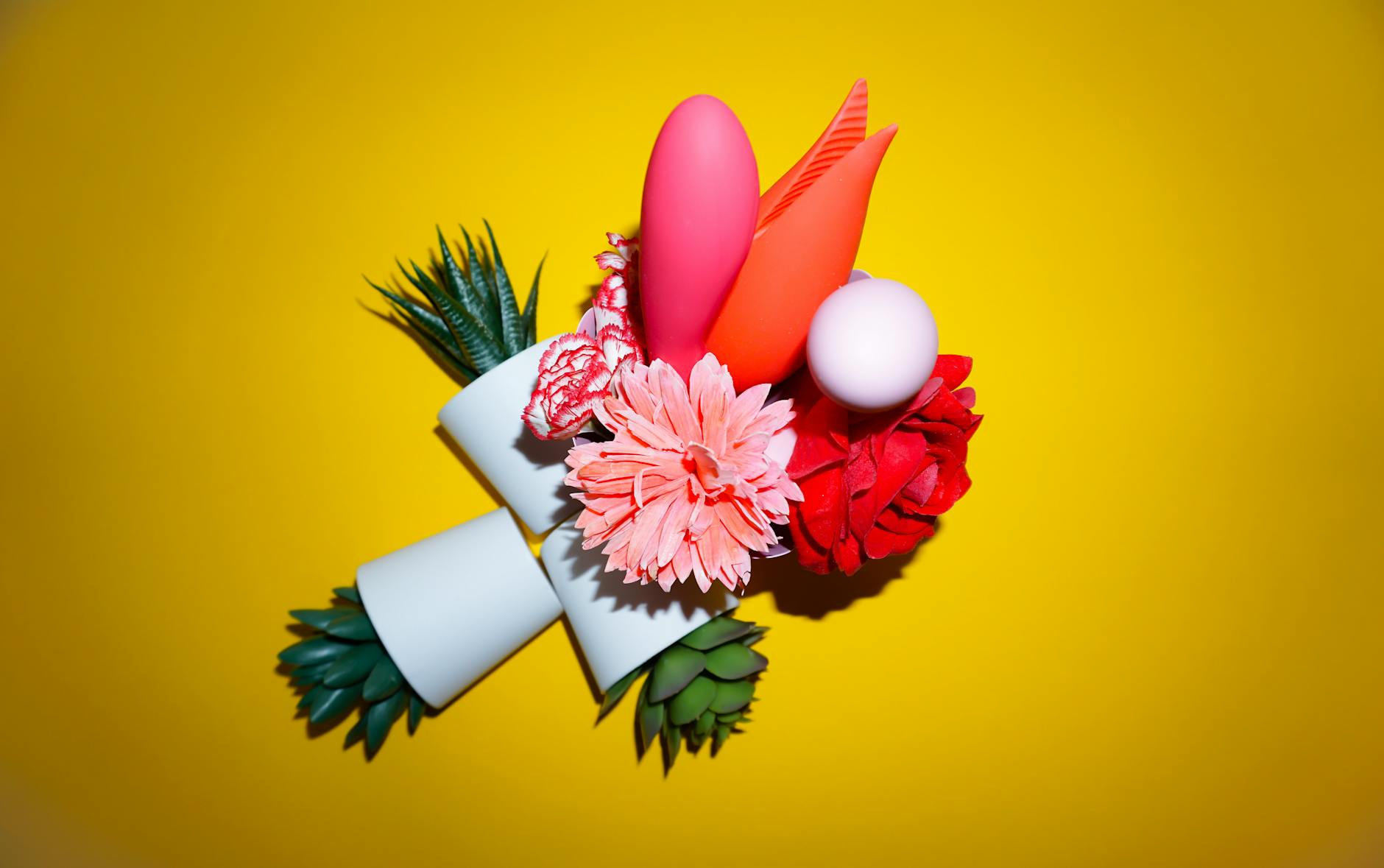
Let's talk about the pill and your pleasure
Hormonal birth control works brilliantly at preventing pregnancy. It's also quietly muting the sensation that makes sex feel worth having. Not for everyone. But if you're on the pill, patch, ring, or implant and your orgasms feel distant or your clitoris feels like it's wrapped in cotton, you're not imagining it.
Here's what I see clinically: people start hormonal contraception, notice within weeks that arousal takes longer to build and sensation feels softer, and then assume it's them. It's not. It's the hormones. And once you understand what's happening, you have options.
How hormonal birth control changes sensation
Your birth control works by suppressing estrogen or preventing the hormonal surge that triggers ovulation. This is effective contraception. It's also why your clitoris might feel less responsive.
Hormonal contraceptives lower dopamine, the neurotransmitter linked to motivation and reward. That translates to less mental arousal. They also reduce blood flow to genital tissue, which means your clitoris takes longer to swell and become sensitive. And because lower estrogen thins vaginal tissue, the physical sensation during stimulation shifts. Everything feels more muted.
One study from Indiana University found that people on hormonal birth control reported lower arousal, less frequent orgasms, and less satisfaction during sex compared to non-users. Another tracked women across their cycle off hormonal contraception and found arousal peaked around ovulation, then observed that peak vanish once they started the pill.
The thing nobody tells you: this is dose-dependent. Lower-dose pills produce less numbing than higher-dose ones. Some formulations (especially older progestin types) are worse offenders than others. If you're on a 35mcg ethinyl estradiol pill, you'll likely experience more sensation loss than someone on a 20mcg formulation.
Why vibrators with suction work differently
This is where lemon sexual toys and specifically suction-based vibrators like the Lem enter the picture. Traditional vibration stimulates through rapid movement. That works, but when sensation is already dulled, you need more input to break through.
Suction-based vibrators operate on a different principle. Instead of vibration alone, they create a gentle pulling sensation that engages nerve clusters around the clitoris more directly. This creates what researchers call "consistent sustained pressure combined with pulsation," which wakes up sensation faster and more intensely than conventional vibration.
The Lem, for instance, uses air-pulse technology that mimics the sensation of oral sex. That approach bypasses some of the dampening that hormonal contraception creates. You're not fighting against reduced blood flow in the same way. The suction literally draws blood into the area and creates stimulation that doesn't rely as heavily on pre-existing tissue sensitivity.
For people whose birth control has dialed down their responsiveness, this matters practically. It means you can reach orgasm with less frustration. It means you might actually feel pleasure again, not just go through the motions.
The timing question: does it get better if you stop
Yes and no. If you come off hormonal contraception entirely, your dopamine, blood flow, and estrogen levels rebound. Most people report increased libido and sensation within 2-4 weeks. For some, it takes 2-3 months for everything to stabilize.
But plenty of people need or prefer to stay on hormonal birth control. It's effective, it's convenient, and stopping it creates other complications (pregnancy risk, switching to a different method, managing your cycle again). So the question becomes: how do you maximize pleasure while staying on a method that's working for contraception?
The answer isn't to white-knuckle through reduced sensation. It's to use tools that work with what's actually happening in your body right now. Tools like lemon clitoral vibrators that create different kinds of stimulation.
If you've been thinking about switching methods anyway, talking to your gynaecologist about lower-dose pills or non-hormonal options like copper IUDs makes sense. But that's a separate conversation from pleasure, and it shouldn't hold you hostage.
Practical strategies alongside vibration
Vibrators alone aren't the whole story. Three other adjustments make a real difference:
Extend your foreplay window. Your body is slower to arouse on hormonal birth control. Budget 20-30 minutes for warm-up instead of 10. This isn't a problem to fix; it's just the physiological reality. Work with it.
Cycle your stimulation. Start on a lower setting on your lemon vibrator and build up. Many people find that alternating between suction patterns (like moving between the Lem's gentler and stronger modes) creates more sensation than staying on one intensity.
Use this alongside partnered touch. Vibrators aren't a replacement for a partner's hands or mouth. They're an amplifier. Use your lemon sexual toys while your partner touches you elsewhere, or alternate between human contact and vibration. That variety keeps sensation fresh.
Talk to your partner about timing. If you're on birth control that dulls your arousal, your partner might not notice you're less turned on. They might think they're doing something wrong. Have the conversation: "My body takes longer to warm up on this method. That's not about you. Here's what helps me." This prevents resentment and lets both of you work toward pleasure together.
When sensation loss is a sign to switch
Not everyone on hormonal birth control experiences numbed sensation. But if you do, and if it's affecting your quality of life or relationship, it's worth revisiting with your doctor.
Copper IUDs produce no systemic hormone suppression. Neither do barrier methods like condoms or diaphragms. Some people find that switching from daily pills to a lower-dose patch, or to a progestin-only method like the mini-pill, reduces the sensation-dampening effect. Others discover their best fit isn't hormonal contraception at all.
This isn't a small thing. Your pleasure matters. You shouldn't have to choose between effective contraception and being able to orgasm.
If you're staying on your current method and using lemon vibrators alongside it, track what works. Some people find that suction-based devices like the Lem activate sensation more reliably than traditional vibration. Others need the combination of both. Pay attention to your own body's response.
Your pleasure is not collateral damage. It's information.
FAQ: Hormonal birth control and sensation
Does every hormonal birth control method reduce sensation equally?
No. Pill formulations with lower doses of estrogen (20-30 mcg) typically produce less sensation loss than 35-50 mcg formulations. Progestin-only methods like the mini-pill tend to have less effect on libido than combined pills. The hormonal IUD (like Mirena) affects sensation differently than pills because it releases hormones directly into the uterus, not your whole bloodstream. Copper IUDs and barrier methods don't suppress hormones at all, so they won't cause this kind of numbness. If sensation loss is significant for you, asking your doctor about your specific formulation's hormone dose is worth doing.
How long does it take to feel sensation come back after stopping birth control?
Most people notice improved arousal and sensation within 2-3 weeks of stopping hormonal contraception. Dopamine bounces back quickly. Blood flow to genital tissue rebounds within the first cycle off the pill. Complete stabilization (when everything feels truly normal again) usually takes 2-3 months as your natural hormone cycle reestablishes itself. During that transition, using lemon clitoral vibrators can help you explore sensation as it returns.
Can vibrators help with sensation loss if I stay on my birth control?
Absolutely. Suction-based vibrators like lemon sexual toys work differently than traditional vibration alone. They create direct stimulation that doesn't rely as heavily on pre-existing tissue sensitivity. Many people find that using these tools while on hormonal contraception lets them reach orgasm more easily and feel pleasure more intensely than they would without any vibrator. It's not a workaround for a broken system. It's using a tool designed for your actual physiology right now.
Is numbed sensation from birth control permanent?
No. Sensation loss from hormonal contraception is completely reversible. It only persists while you're taking the hormones. Once you stop, your dopamine, blood flow, and tissue responsiveness normalize. For some people this happens in weeks. For others it takes a couple of months. But it does come back.
Does using vibrators make sensation loss worse over time?
No. This is a common worry and it's unfounded. Using vibrators doesn't reduce your natural sensitivity. If anything, using lemon vibrators while on birth control keeps your sexual response system engaged. Sensation loss from hormonal contraception comes from the hormones themselves, not from how much or how often you use a vibrator. You can't make it worse by using tools to work around it.
Should I try a different vibrator if the Lem doesn't work for me on birth control?
Maybe. Suction-based vibrators like the Lem work well for many people on hormonal contraception, but every body is different. If you find that suction doesn't create enough sensation, a more intense traditional vibrator might help. Or you might need to combine approaches: suction plus external vibration, or using a vibrator alongside your partner's touch. Pay attention to what actually wakes up sensation for you, not what's supposed to work in theory.
The bottom line
Hormonal birth control is one of the most effective contraceptive tools we have. That doesn't mean accepting numbed sensation as the price of preventing pregnancy. Your pleasure matters. Understanding what's happening in your body, using tools like lemon vibrators that work with your actual physiology, and having honest conversations with your partner and doctor about what you need means you don't have to choose between contraception and satisfaction.
Your sensation can come back. And in the meantime, lemon clitoral vibrators are designed to help you feel it again.