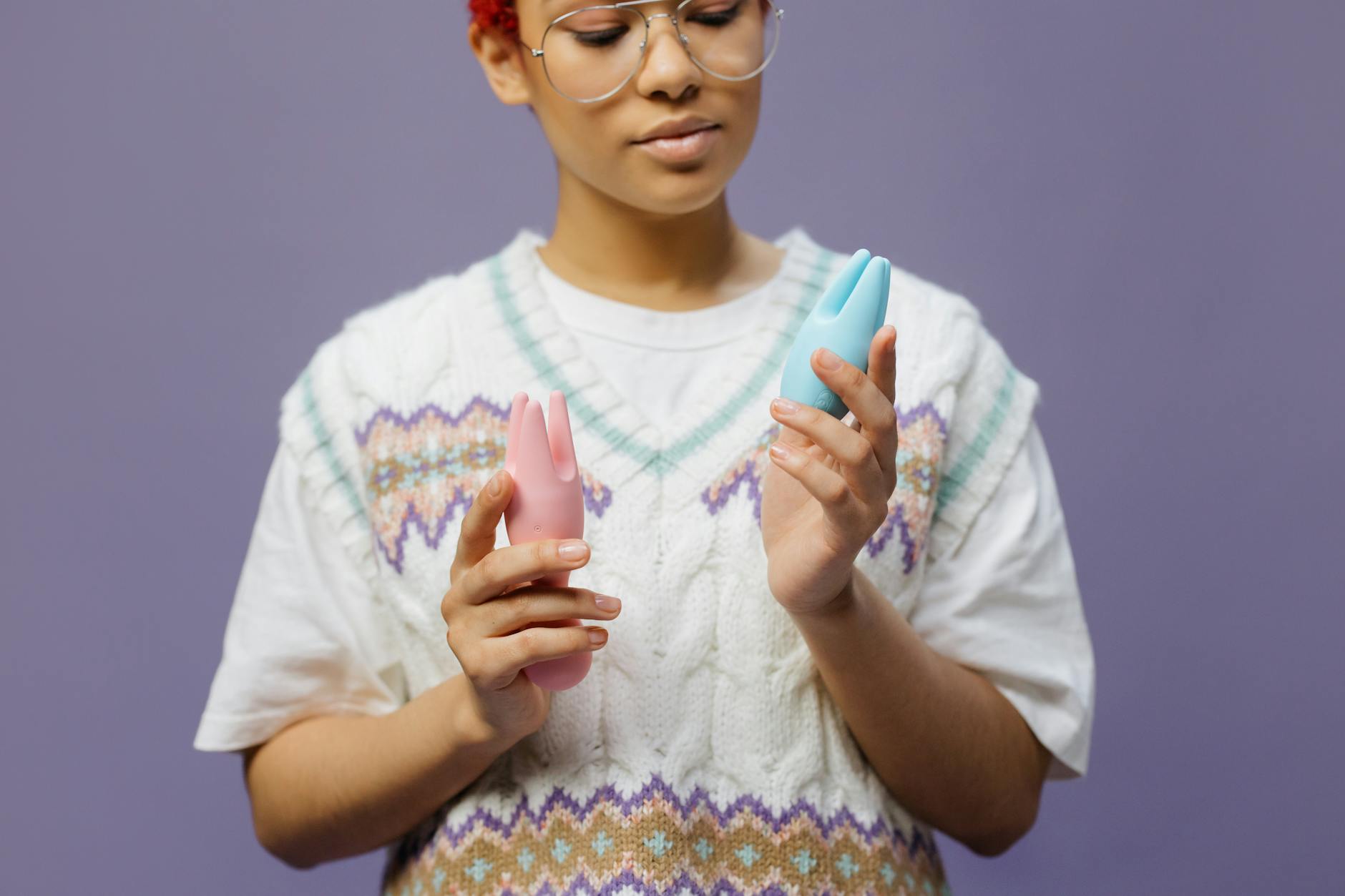
Let's talk about what actually works
Honestly? The vibrator conversation has been oversimplified. For years, people assumed faster vibration equals better pleasure. Then lemon vibrators entered the picture, and suddenly the conversation got more interesting. Suction is not vibration. They're different technologies that activate your body in different ways.
Here's what I've learned from working with people navigating pleasure after major life transitions: one device is not better than the other. But they're built for different kinds of stimulation, and knowing the difference changes everything.
How vibration actually works on your body
Traditional vibrators are exactly what they sound like. A motor creates rapid oscillation that travels through the device into your tissues. The sensation is rhythmic and broad. Good vibrators create patterns that let you build intensity gradually, and most operate in the 5,000 to 15,000 Hz range.
Vibration is excellent for sustained arousal. It's also reliable. You turn it on, you know what you're getting. The stimulation is consistent and predictable, which matters when you're learning what you like or when you need straightforward pleasure without complexity.
Where vibration has limits: some tissues find it too intense too quickly. Sensitive clitoral tissue, especially after hormonal shifts or with certain skin conditions, can feel overstimulated by direct vibration even on lower settings. The sensation can also plateau. Your body adapts to repetitive input, which is why people sometimes chase stronger and stronger vibrations looking for that initial spark.
What suction technology does differently
Lemon vibrators use air-pulse or suction technology. Think less "shaking" and more "rhythmic gentle pressure that releases." The sensation mimics oral stimulation in a way vibration never quite does. Instead of activating surface nerves through oscillation, suction draws tissue upward and stimulates deeper nerve clusters.
The sensation is also more concentrated. You're not vibrating your entire external anatomy. You're creating rhythmic pressure and release in one specific zone, which means the feedback loop between your body and the device is tighter. Many people describe it as more focused and easier to control emotionally.
Lemon clitoral vibrators also tend to have a gentler entry point. Most start at lower intensity levels, which means you're not choosing between "off" and "moderate shock." You can ease in, which matters wildly for bodies rebuilding sensitivity after menopause, postpartum recovery, or medication side effects.
The actual difference in sensation
If you've ever experienced the difference between being vibrated and being gently suctioned, you know they feel nothing alike. Vibration creates a steady "bzzzz" that you feel across a broader area. Suction creates a pulsing sensation that feels more localized and rhythmic.
For people with highly sensitive tissues, suction often wins. There's less friction involved. You're not dealing with direct mechanical pressure on delicate skin. The sensation is more about pressure and release than about shaking, which some people find less likely to cause discomfort.
However, some people prefer the intensity and broad activation of traditional vibration. If you like powerful sensations and your tissues tolerate direct contact well, a quality vibrator might deliver the orgasm you're after faster. The key word is might. Pleasure is individual.
When lemon vibrators excel
I recommend lemon clitoral vibrators to clients in specific situations. First: sensitivity. If you've spent years avoiding certain types of touch because standard vibrators feel too harsh, a lemon suction device often changes the equation. The gentler pressure-and-release sensation can reintroduce pleasure without overwhelm.
Second: recovery and rebuilding. Whether you're six months postpartum, transitioning through perimenopause, or dealing with side effects from medication, tissue sensitivity fluctuates. Lemon vibrators let you explore pleasure at lower intensity without compromising sensation quality. You get real stimulation without feeling like you're being shocked.
Third: people exploring solo pleasure for the first time. The learning curve with a lemon suction device is gentler. You're not managing intense vibration while also figuring out angle, pressure, and rhythm. You can focus on what feels good without the cognitive load.
Fourth: reaching orgasm through different pathways. If you've always used vibration and orgasms feel like they've plateaued, switching technology can reset your nervous system's response. Many of my clients find that alternating between vibration and suction deepens overall capacity for pleasure.
When traditional vibrators are the move
Let's be clear: traditional vibrators remain powerful tools. They excel when you want straightforward intensity. If you know exactly what pattern gets you there and you want to get there fast, a good vibrator delivers.
Vibrators also give you more pattern variety. Many include multiple rhythms, pulses, and intensities. If you like exploration and experimentation, traditional vibrators offer more buttons to push literally and figuratively.
They're also more universally compatible with certain types of partnered play. If you're incorporating a device during sex with a partner, vibrators are often easier to manage during penetration because they're smaller and can be positioned more fluidly.
For people with less sensitive tissues or those who simply prefer powerful, direct stimulation, vibrators are often the obvious first choice. Pleasure should not feel like a compromise, and for many people, vibration is exactly what their body craves.
How to actually choose between them
Here's the honest framework I use with clients. Ask yourself three questions.
First: are your tissues sensitive right now? If yes, or if you're uncertain, start with a lemon vibrator. The lower entry point and gentler sensation reduce the risk of overstimulation.
Second: do you like variety or consistency? If you like having lots of options and experimenting with patterns, traditional vibrators usually offer more control. If you prefer simplicity and want one device that does one thing exceptionally well, a lemon clitoral vibrator is cleaner.
Third: have you used similar devices before? If you're experienced with vibrators and love them, there's no reason to switch. If you're returning to pleasure after a gap, trying something different can feel less charged. You're not recreating what used to work. You're discovering what works now.
Honestly, the best answer for many people is not either-or. The most commonly overlooked option is both. Having a gentle suction device for tender days and a versatile vibrator for exploring intensity is a very normal way to build a pleasure practice that actually fits your life.
The research backs it up
Studies comparing suction and vibration show they activate different neural pathways. Suction technology tends to engage deeper nerve clusters in the clitoris, while vibration creates broader surface activation. Neither is objectively "better." They're better for different people and different moments.
One thing research does show consistently: people report higher satisfaction when they choose the device based on their actual tissue sensitivity and preference, not based on what they think they should prefer. Using a lemon sucker because it sounds fancy but you actually want vibration is a waste of money. Being honest about what feels good matters more than branding.
Practical next steps
If you're considering switching from traditional vibrators to a lemon clitoral vibrator, start with the entry-level versions. They're more affordable and let you test whether suction technology works for your body without significant investment. If you've been using a lemon vibrator and want to expand, add a versatile vibrator with multiple patterns rather than replacing what works.
Remember: the device that delivers the most pleasure is the one you'll actually use. If that's a traditional vibrator, wonderful. If it's a lemon vibrator, also wonderful. If it's something else entirely, that's fine too.
Your pleasure deserves that honesty. Nothing else matters as much.
People also ask
Are lemon vibrators better than regular vibrators?
Neither is objectively "better." They use different technology. Lemon vibrators use suction or air-pulse stimulation, which feels more focused and is often gentler on sensitive tissue. Traditional vibrators use oscillation for broader, more intense activation. Better depends entirely on your tissue sensitivity, preference, and what you're trying to achieve. Many people benefit from having both.
Can you use a lemon vibrator if you prefer intense stimulation?
Yes. While lemon clitoral vibrators tend to have gentler entry-level settings, many higher-end models include more powerful suction settings. If you like intensity, look for devices with adjustable strength levels. You might also alternate between suction and vibration depending on mood and sensitivity that day.
Do lemon vibrators work for everyone?
Most people find suction stimulation pleasurable, but not all. Some tissues simply respond better to vibration. The best way to know is to try one, ideally a basic model from a reputable brand. If it doesn't work after a few uses, it's okay. You might belong in the vibration camp, and that's completely valid.
How long does it take to experience pleasure with a lemon vibrator?
It varies. Some people feel immediate sensation. Others need five to ten minutes of use to understand how their body responds to suction versus vibration. The gentler entry point means you can explore at your own pace without feeling rushed or overstimulated.
Can you use a lemon vibrator with a partner?
Absolutely. Lemon clitoral vibrators are often easier to use during partnered sex than larger traditional vibrators because they're smaller and can be positioned more precisely. Communication with your partner about when and how to introduce it matters more than the device itself.
What if I have sensitive skin or had recent hormonal changes?
A lemon vibrator is often the safer starting point. The suction technology creates less friction and feels gentler on tissue rebuilding sensitivity. You're less likely to experience discomfort or overstimulation. Many people dealing with perimenopause or postpartum changes find lemon clitoral vibrators more comfortable than traditional vibrators during their recovery period.
The real takeaway
You don't have to choose between lemon vibrators and traditional vibrators based on what you think you should prefer. Choose based on what your body actually needs right now. That might be the focused, gentle sensation of a lemon suction device. That might be the intense, reliable power of a traditional vibrator. That might be both, rotating depending on how you feel.
Pleasure is not one-size-fits-all. Your device shouldn't be either. If you're curious about how lemon vibrators might fit your practice, start small and pay attention to what your body tells you. That feedback loop is more valuable than any review or recommendation.
Want to explore your options? Check out Hello Nancy's collection to see what resonates, or reach out if you have questions.